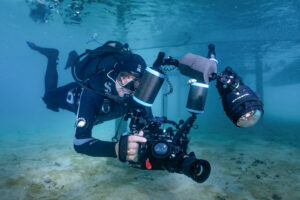
Choosing the right lens for underwater photography isn’t just a technical decision—it’s a creative one. Whether you’re shooting coral reefs, shipwrecks, or tiny critters, your lens choice can make or break your results. This guide covers the main types of underwater lenses, what conditions they’re best for, and how to match your gear to your shooting goals.
Why Lens Choice Matters Underwater
Water affects light and sharpness in ways that land photography doesn’t. Refraction, reduced contrast, and color loss all kick in the moment you submerge your camera. Using the right lens—paired with the correct port—helps you overcome these challenges, whether you’re going for dramatic wide scenes or detailed close-ups.
Main Types of Lenses Used Underwater
Wide-Angle Lenses
Wide-angle lenses are ideal for capturing large subjects and open scenes, like reefs, wrecks, or big marine animals. They let you get close to your subject (which minimizes water between you and the lens), helping maintain sharpness and color. When paired with a dome port, distortion is reduced, and your field of view stays wide and natural.
Best for:
- Coral reefs
- Wrecks
- Sharks, manta rays, and other large marine life
Popular focal lengths: 14mm–24mm (full-frame), 7mm–14mm (micro four-thirds)
Macro Lenses
Macro lenses excel at capturing tiny details in small marine life, like nudibranchs, shrimp, or textures on corals. Their close focusing ability and magnification make it possible to reveal details invisible to the naked eye.
Best for:
- Critters and nudibranchs
- Coral textures
- Close-up fish portraits
Popular focal lengths: 60mm, 100mm macro (full-frame); 45mm macro (micro four-thirds)
Matching Lenses to Underwater Conditions
Low Visibility or Murky Water
Use wide-angle lenses and get close to your subject to reduce backscatter and preserve clarity. A dome port will help correct for refraction and give cleaner edges.
Clear, Shallow Water
Both macro and wide-angle lenses work well here. You can capture broad reef scenes or detailed critter shots depending on the dive site and light conditions.
Deep Water with Low Light
Choose fast lenses (f/2.8 or faster) to capture more light. Add strobes or video lights to bring back color and contrast.
Shop underwater lighting options
Green Water
Go macro. In low-visibility environments like temperate waters or lakes, close focusing helps you work around the water quality.
Prime vs. Zoom Lenses
Prime lenses often deliver better image quality and brighter apertures. Zoom lenses, on the other hand, give more flexibility, especially if you’re shooting a mix of subjects during one dive. There’s no “better” option—it depends on what and how you like to shoot.
Wet Lenses & Port Systems
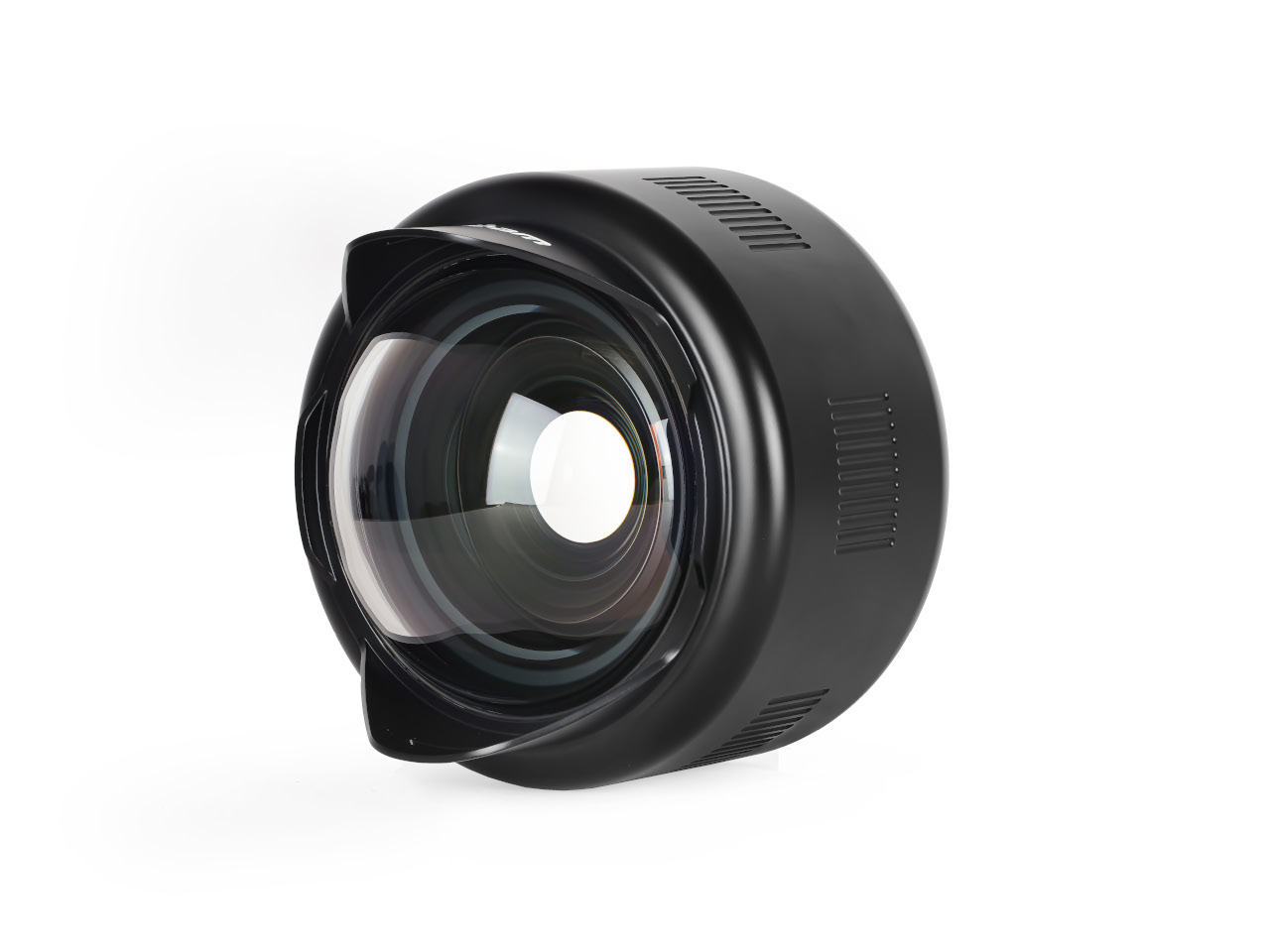
Compact shooters can gain flexibility with wet lenses—add-on lenses that mount in front of your housing. You can switch between wide and macro during the same dive without opening the housing.
For mirrorless and DSLR systems, interchangeable ports (dome for wide, flat for macro) let you customize your setup. Just remember: lens + port compatibility is critical.
FAQs
Do I need a dome port for wide-angle lenses?
Yes, especially if you want to avoid distortion and preserve edge-to-edge sharpness.
Can I use a standard lens underwater?
Only if it’s inside a properly sealed housing. Still, lenses not designed for underwater use may not perform optimally due to focus and light behavior underwater.
How do I protect my lens setup?
Rinse everything in fresh water after each dive, dry thoroughly, and check for any corrosion or wear—especially around o-rings and ports.
Final Thoughts
Lenses for underwater photography are a critical part of your gear—not just an afterthought. Wide-angle lenses help you tell big, immersive stories. Macro lenses bring you closer to the small details that make diving magical. Whether you shoot reefs, wrecks, or nudibranchs, choosing the right glass means you’ll come back with images worth keeping.
Want help choosing the right setup for your next dive? Browse our full range of underwater lenses and housings.
Shop a wide range of Wet Lenses at Fotografit.eu
Additional reading: