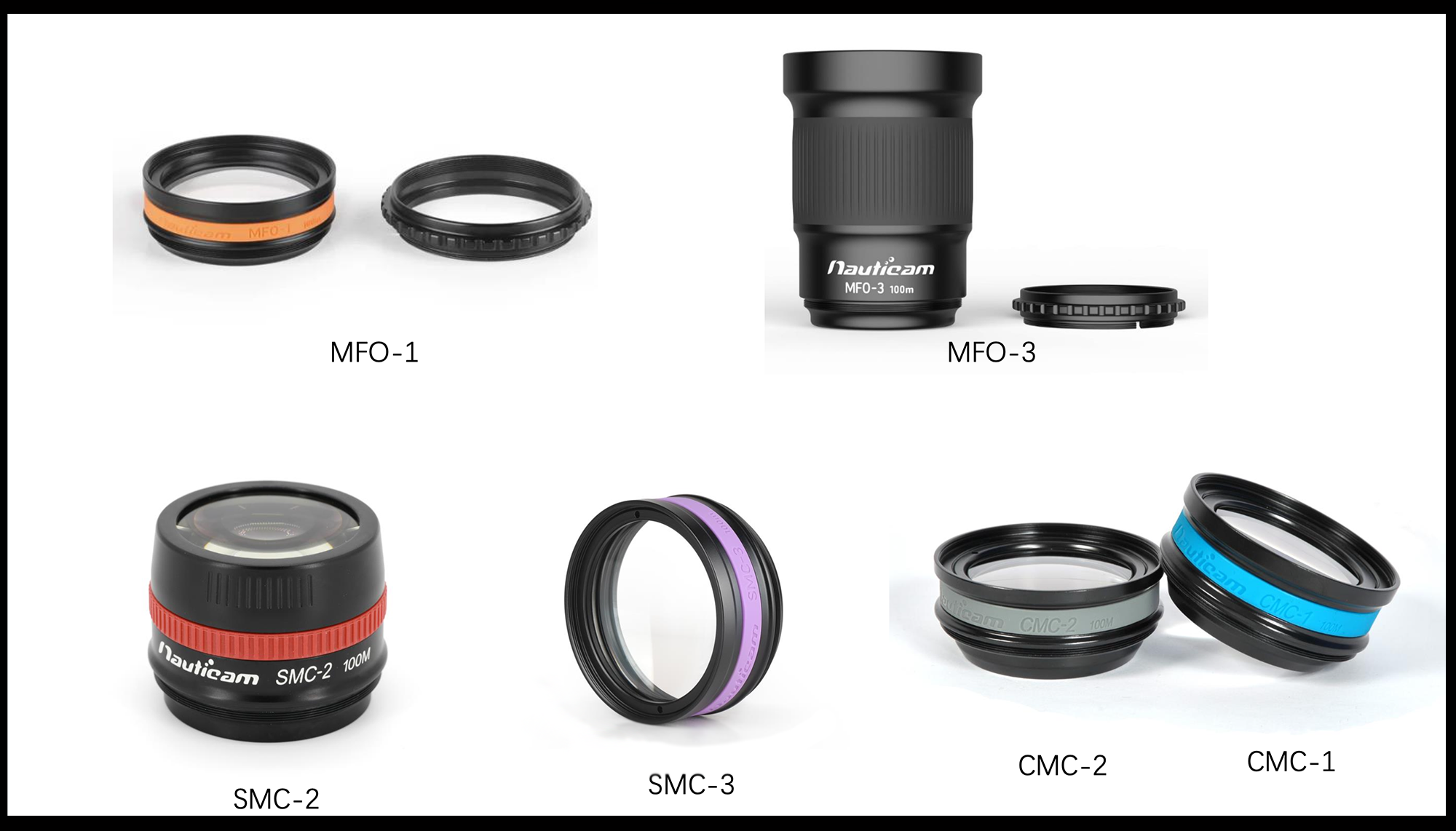
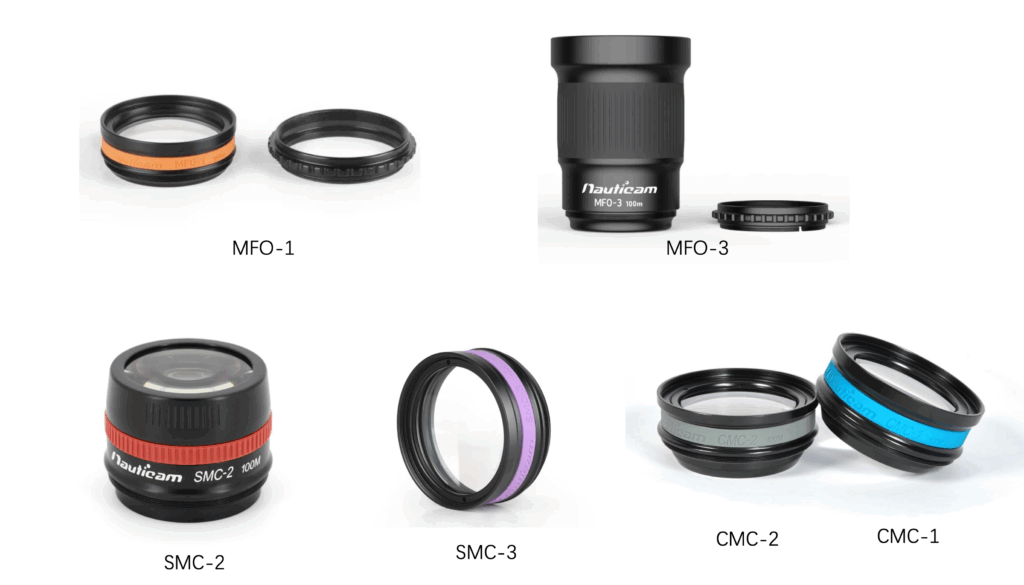
When Nauticam releases a new set of optics, I pay attention. Few brands have refined underwater imaging tools with such precision and purpose. Their 2025 lineup of close-up lenses — from the iconic Super Macro Converters (SMC) and Compact Macro Converters (CMC) to the new Mid-range Focus Optimizers (MFO) — feels like a complete ecosystem built for photographers who live for the fine details beneath the surface.
This isn’t just a spec refresh. It’s a rethink of how we approach macro and mid-range imaging underwater — balancing magnification, working distance, and optical sharpness in a way that gives each lens a clear personality.
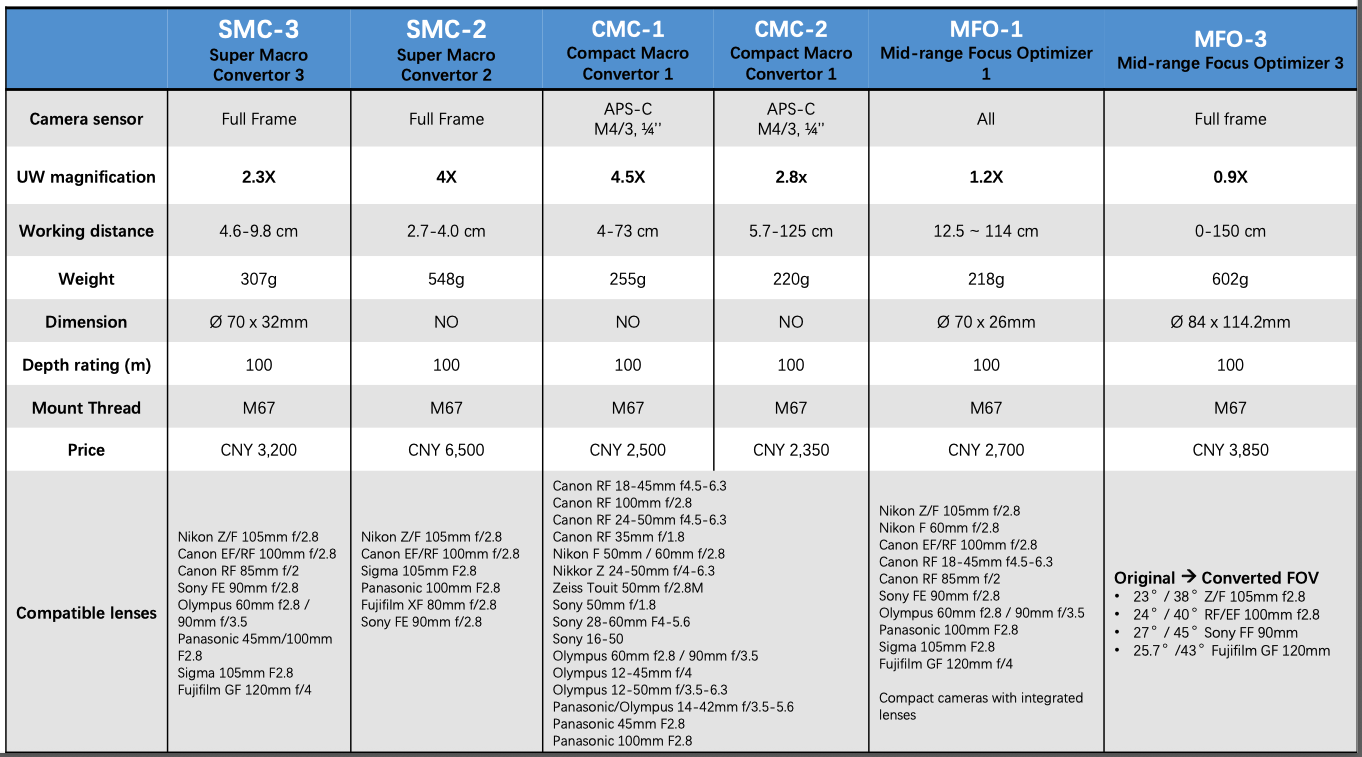
The Super Macro Converters: SMC-3 and SMC-2
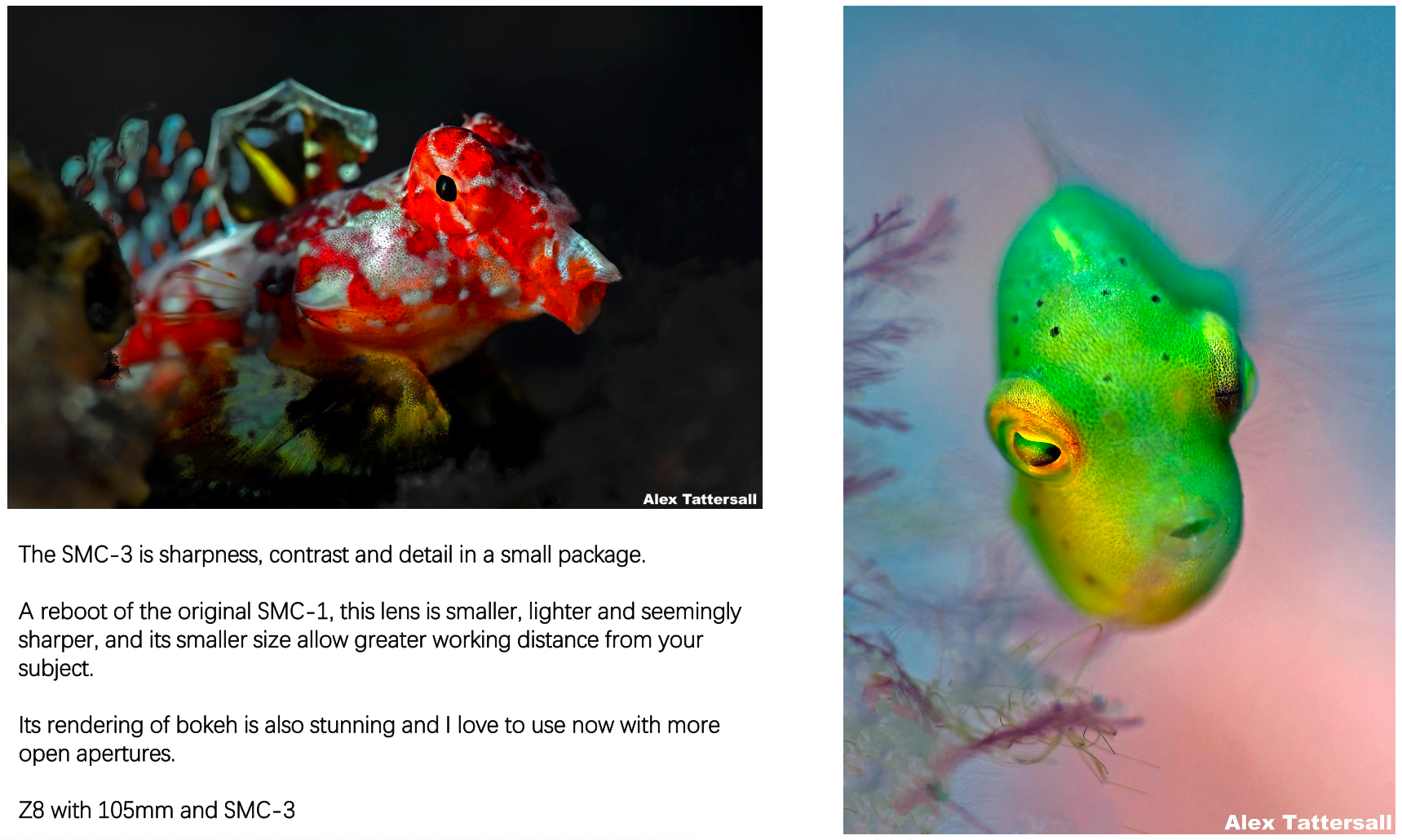
The SMC-3, Nauticam’s latest evolution in its flagship macro series, is a compact powerhouse. Smaller and lighter than its predecessor, it manages to deliver even more sharpness and contrast while extending the working distance a bit — a subtle but crucial benefit when you’re face to face with delicate marine life.
Its bokeh rendering is beautifully smooth, and shooting at wider apertures feels newly rewarding. As Alex Tattersall put it, “The SMC-3 is sharpness, contrast and detail in a small package… its smaller size allows greater working distance from your subject.”
The SMC-2, meanwhile, is the specialist’s tool — built purely for magnification and micro-detail. It’s about revealing what the eye can’t see. Shooting with the SMC-2 is a bit like peering through a microscope at the ocean’s artwork.
Both SMC lenses are engineered for full-frame systems and promise uncompromising optical performance — making them a go-to for serious macro photographers who push their gear as far as it will go.
The Compact Macro Converters: CMC-1 and CMC-2
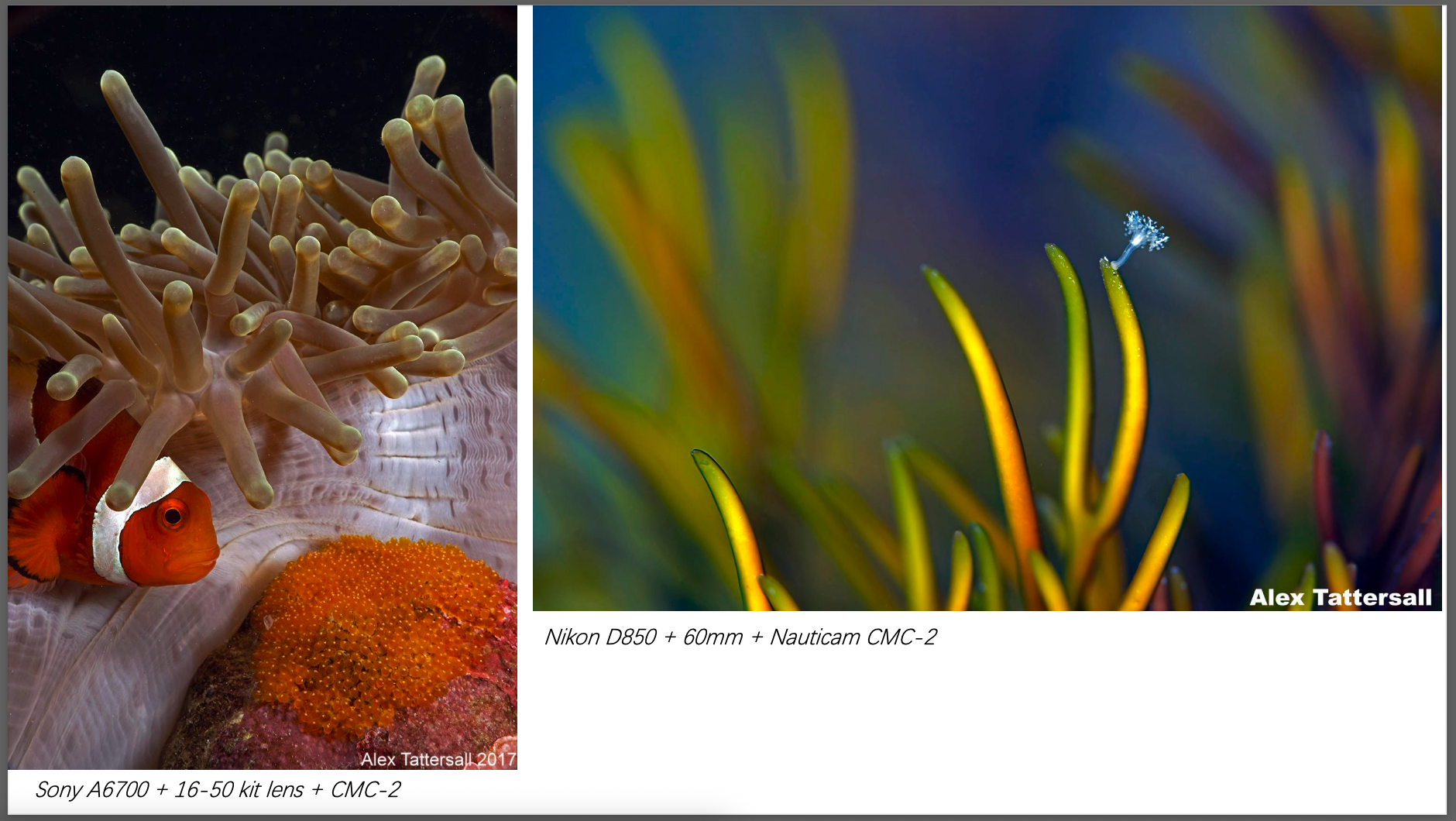
For travel shooters and mirrorless compact setups, the CMC series continues to impress. The CMC-1 and CMC-2 provide serious magnification with surprisingly light and compact builds, making them ideal companions for smaller rigs like the Olympus EM10ii or Sony A6700.
Where the SMCs are about raw macro power, the CMCs are about versatility. I’ve used the CMC-2 on compact and APS-C systems where portability matters, and it’s consistently produced sharp, vibrant images. Nauticam’s optical coating and precise curvature give it a clarity you rarely see in add-on wet lenses.
Even compact camera users (think Canon G7X shooters) will appreciate how these converters unlock a completely new realm of close-up possibilities without compromising autofocus speed or handling.
Mid-Range Focus Optimizers: MFO-1 and MFO-3
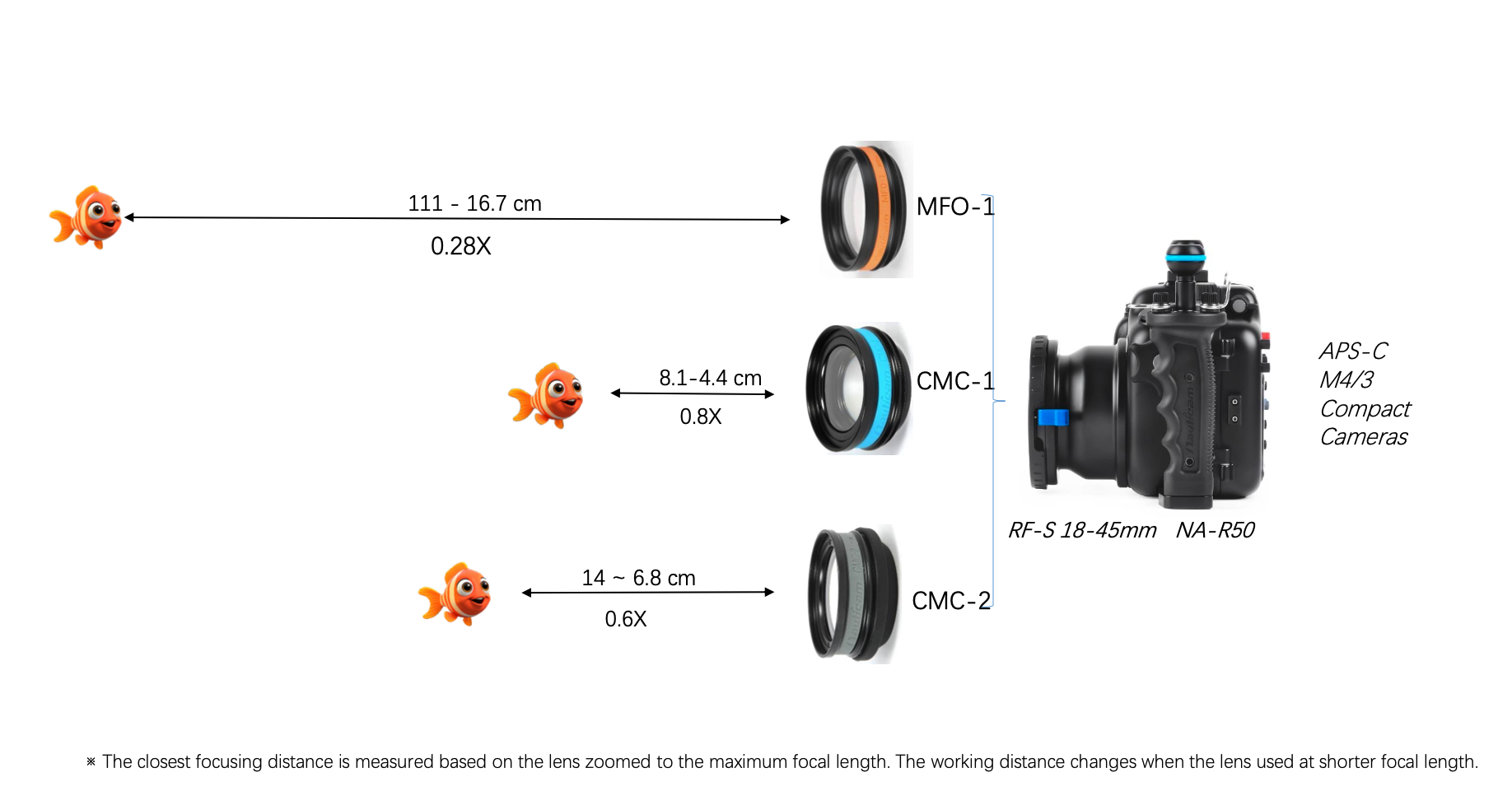
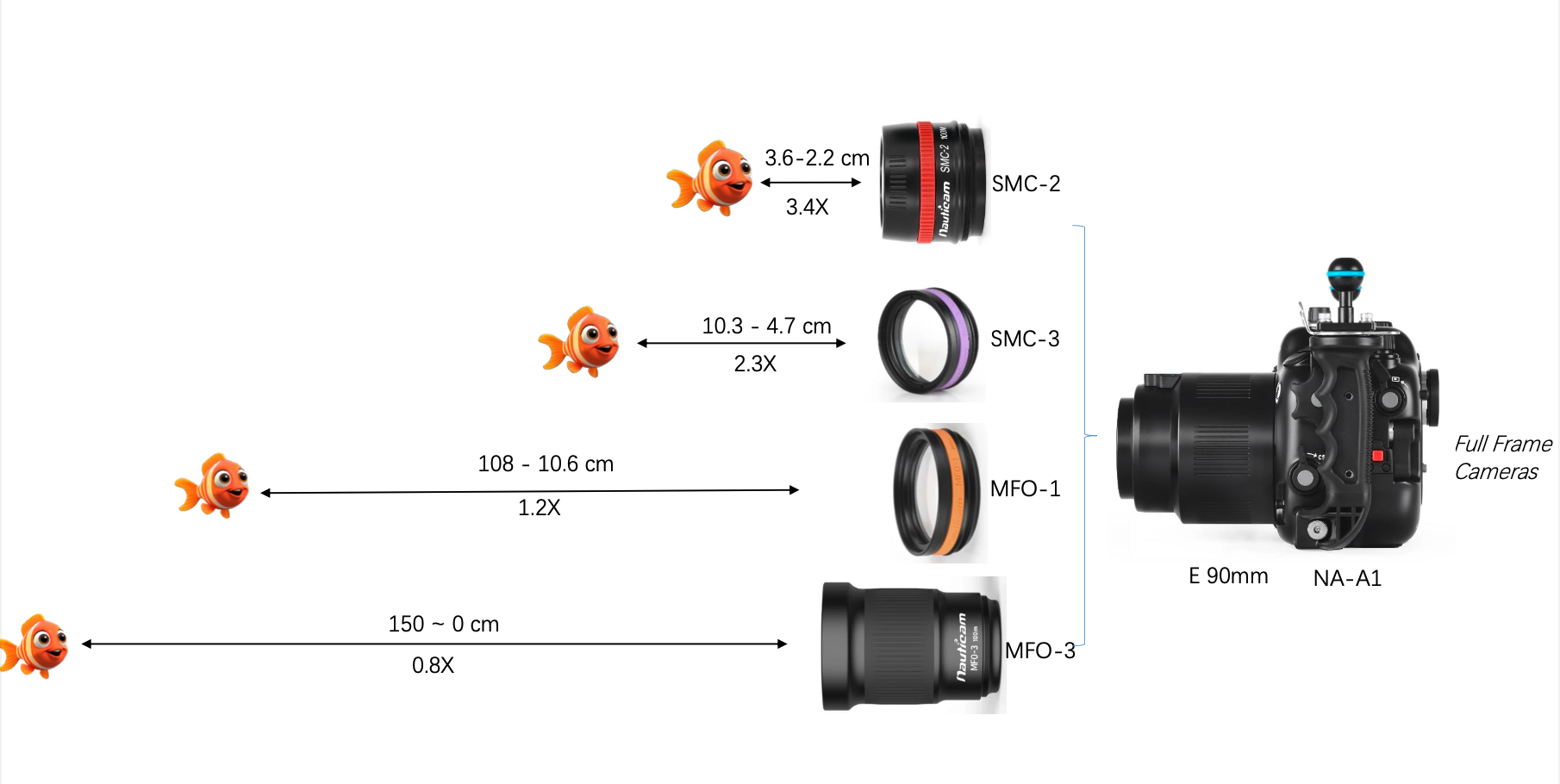
If there’s a true revolution in the 2025 lineup, it’s here. The Mid-range Focus Optimizers — MFO-1 and MFO-3 — redefine what’s possible between macro and mid-range shooting.
These lenses effectively transform the behavior of standard 90mm or 105mm macro lenses, allowing photographers to focus closer, faster, and with greater depth of field. They minimize focus hunting (a common frustration underwater) while maintaining beautiful color reproduction and contrast.
The MFO-1 sits elegantly on a 105mm and quietly improves nearly everything: color fidelity, image sharpness, and focus speed. As Alex Tattersall described, “It sits unassumingly on the front of my 105mm most of the time, improving image quality, reducing hunting and offering some magnification.”
The MFO-3, on the other hand, is the star of the show. It brings a wide, almost cinematic field of view to traditional macro systems — something that both Dr. Alex Mustard and Mike Bartick have praised. Mustard notes, “The MFO-3 basically converts the Canon 100mm into a 60mm macro, and the Sony 90mm into a 50mm — while keeping the fast AF and high-quality optics.”
For underwater photographers working in challenging visibility, the MFO-3 is a dream. It gives you the ability to fill the frame with larger subjects — seahorses, frogfish, or even morays — without backing off into the blue.
In the Field: Voices from the Deep on the MFO-3
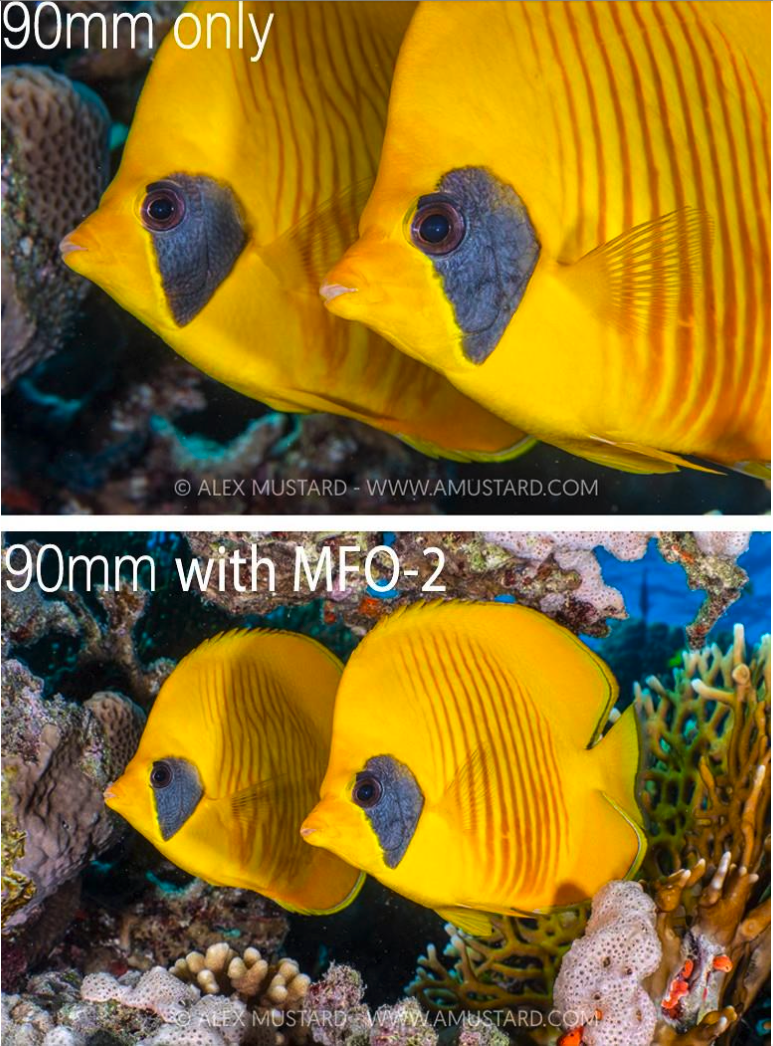
The testimonials in Nauticam’s material read like the collective experience of shooters who’ve tested these optics in every condition imaginable.
Mike Bartick describes using the MFO-3 on a Nikon Z8:
“When photographing behavior, quality is paramount… the MFO-3 significantly improved my focus and overall image quality.”
Alex Mustard echoes this:
“Such shorter focal length macro lenses are very valuable for those that dive in poor visibility or shoot larger macro subjects… It’s impressively sharp across the frame.”
And from Yazid El Shaari, who tested the MFO-3 prototype on a Sony A7RV:
“Its wide field of view gave me the leverage to stay close while still framing the full head of a large honeycomb moray cleanly.”
Hearing that kind of praise from multiple respected shooters tells me this lineup isn’t just about specs — it’s about usability, balance, and creative freedom.
Final Thoughts
With this new generation of close-up optics, Nauticam has built something rare — a cohesive system that lets you choose your macro mood. Whether you’re chasing pygmy seahorses with the SMC-2, experimenting with soft bokeh on the SMC-3, or exploring wide-angle macro with the MFO-3, every lens in this lineup feels purpose-built and optically refined.
For me, that’s what defines great gear: tools that don’t just perform, but inspire you to dive again.
See the Nauticam macro optics
Nauticam wet lenses and macro optics at FOTOGRAFIT.eu
See the current Nauticam close-up range, including SMC, CMC and MFO optics, together with the other Nauticam wet-lens options.