OM PEN – the natural upgrade from your TG-7?
For many underwater photographers, the Olympus / OM SYSTEM TG series is the obvious place to start. A TG-6 or TG-7 is small, simple, rugged and capable of producing surprisingly good underwater images. But sooner or later many photographers reach the same point: they want more manual control, better image quality, faster autofocus and access to real interchangeable lenses — without immediately ending up with a large and heavy camera system.
That is exactly where the new OM SYSTEM PEN becomes interesting.
On paper it looks like a stylish compact everyday camera. Underneath, however, it is a serious Micro Four Thirds camera with interchangeable lenses, full manual exposure, two command dials, 121-point phase-detection autofocus, 5-axis stabilisation and a dedicated AF-ON button. That makes it particularly relevant to underwater photographers — and especially to TG-7 users who want to take the next step without giving up the compact-camera philosophy completely.
So the important question for me is not simply whether the new PEN is a good camera. It is: could this be the natural upgrade from a TG-7 without becoming a super expensive system?
Why TG-7 photographers should look at the PEN
If you are coming from a TG-7, the strength of the PEN is not simply that it is “better”. The interesting part is how it is better.
The TG-7 is attractive because it is easy to travel with, quick to use and simple to build into a compact underwater system. But it is still a compact camera with a fixed lens and a comparatively small sensor. With the PEN you move into a true camera system: a larger Micro Four Thirds sensor, interchangeable lenses, RAW files with more latitude, faster and more configurable autofocus, and much more direct control over exposure and focusing.
Underwater, that opens a different set of possibilities. Instead of asking one fixed lens to do everything, you can build the camera around the job: macro, super-macro, fisheye, rectilinear wide angle or a versatile travel setup. That is the real step up from a TG-7… OR… you could just keep the 14-42mm kit lens and use wetlenses.
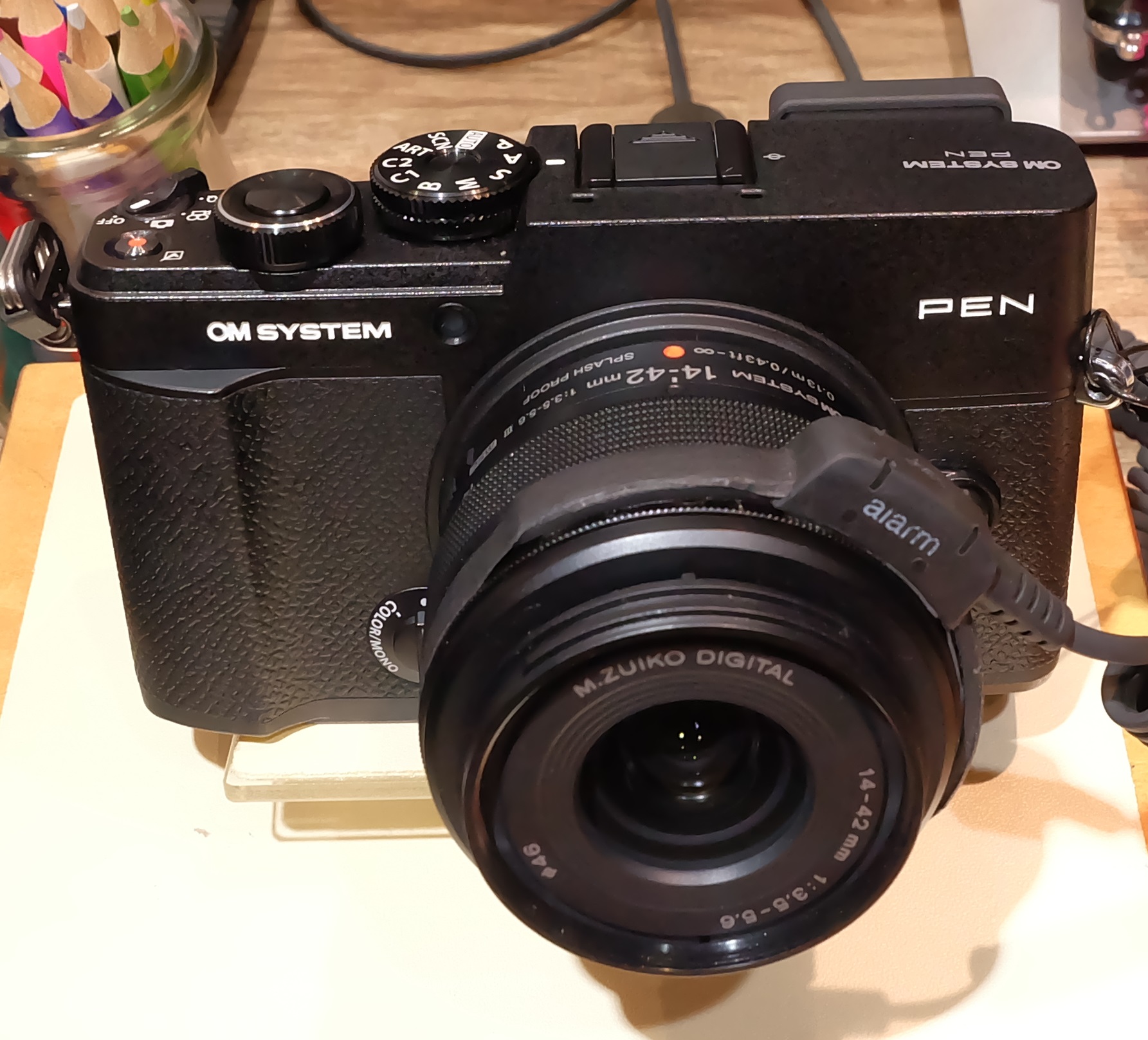
A new PEN — not simply an updated E-P7
OM Digital Solutions announced the new OM SYSTEM PEN in September 2026 as the first PEN-series camera to carry the OM SYSTEM name. It follows the original PEN idea from 1959: a camera compact enough to carry every day, but capable of serious photography.
The new model uses a 20.4-megapixel Live MOS Micro Four Thirds sensor with the TruePic IX processor. Autofocus combines on-sensor phase detection and contrast detection across 121 all-cross-type AF points. OM SYSTEM also adds AI-based Human and Dog/Cat subject detection…. hmmm… wonder if it has fish detection too? 😉
Built-in 5-axis image stabilisation is rated at up to 5.5 stops, and for the first time in the PEN line the body is dust- and splash-resistant, with IPX1-rated splash protection. The camera has an eye-level 2.36-million-dot OLED electronic viewfinder and a fully articulating 3-inch touch screen.
Yes — it has proper manual exposure control
This is one of the most important points for me. The PEN is not limited to automatic or semi-automatic exposure. The mode dial provides Program, Aperture Priority, Shutter Priority and full Manual exposure, together with Bulb/Live Bulb/Live Time/Live Composite and custom modes.
Manual ISO is available from approximately ISO 64/100 through ISO 25,600. The mechanical shutter reaches 1/4000 sec, while the electronic shutter can reach 1/32,000 sec. RAW capture is 12-bit, and RAW+JPEG can be recorded together, should you like that. (I don´t)
For practical operation, the important detail is that the camera has front and rear command dials. In Manual mode that means aperture and shutter speed can be handled independently without diving into menus. The dial functions can also be customised.
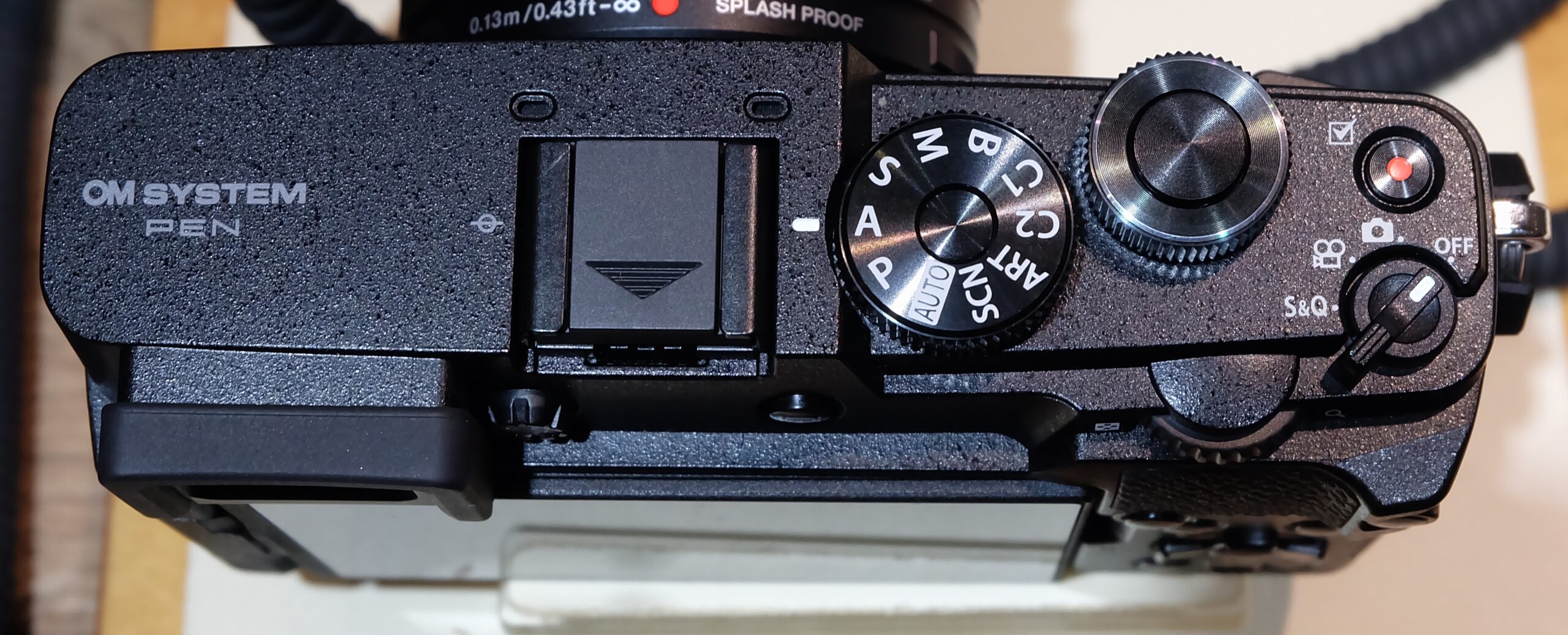
Full manual control – the part that matters underwater
This is where the PEN starts to become genuinely interesting in an underwater context. Good underwater handling is not about attractive menus and certainly not touch controls. It is about how quickly and intuitively you can change the things you actually use on a dive: aperture, shutter speed, ISO and focus mode.
The PEN looks promising because it does not merely offer an M setting in a menu. It has two command dials, a physical mode dial and a dedicated AF-ON button. In other words, it appears to be a camera that can actually be worked manually, rather than one that simply happens to include manual exposure.
That distinction becomes much more important underwater. The controls have to remain usable through a housing while wearing gloves, managing buoyancy, current, strobes and a subject that may disappear in seconds.
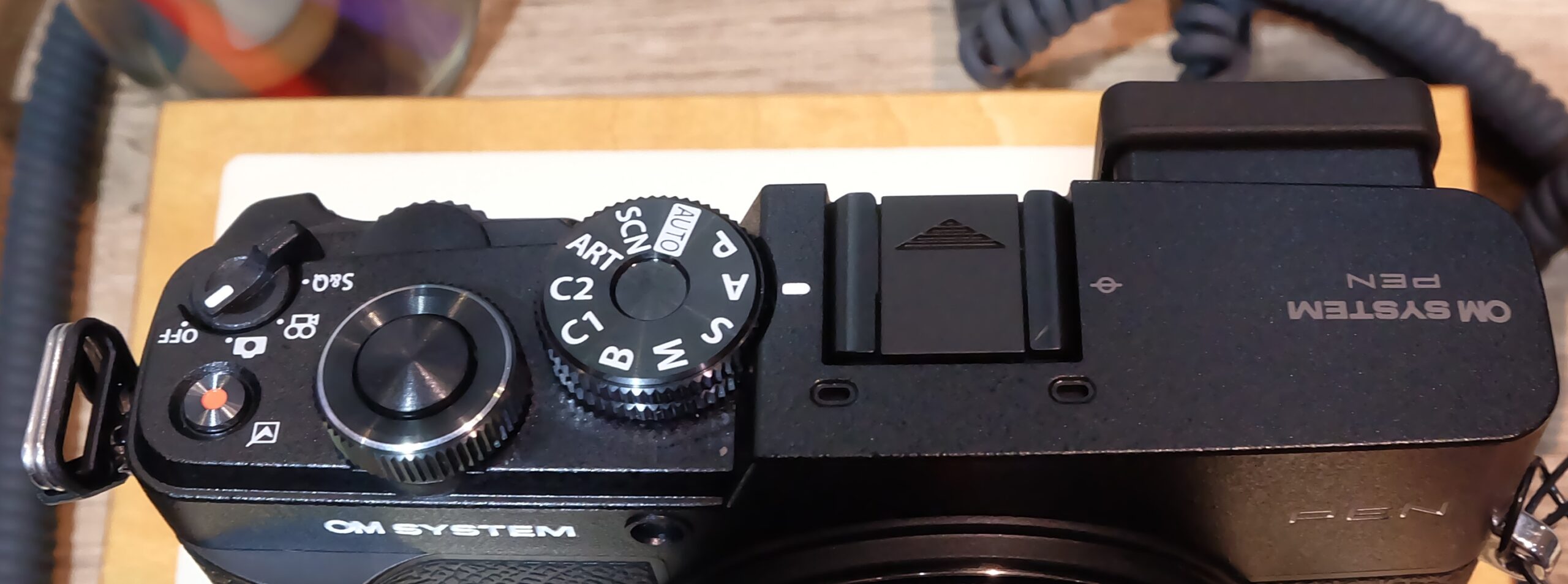
The control layout matters
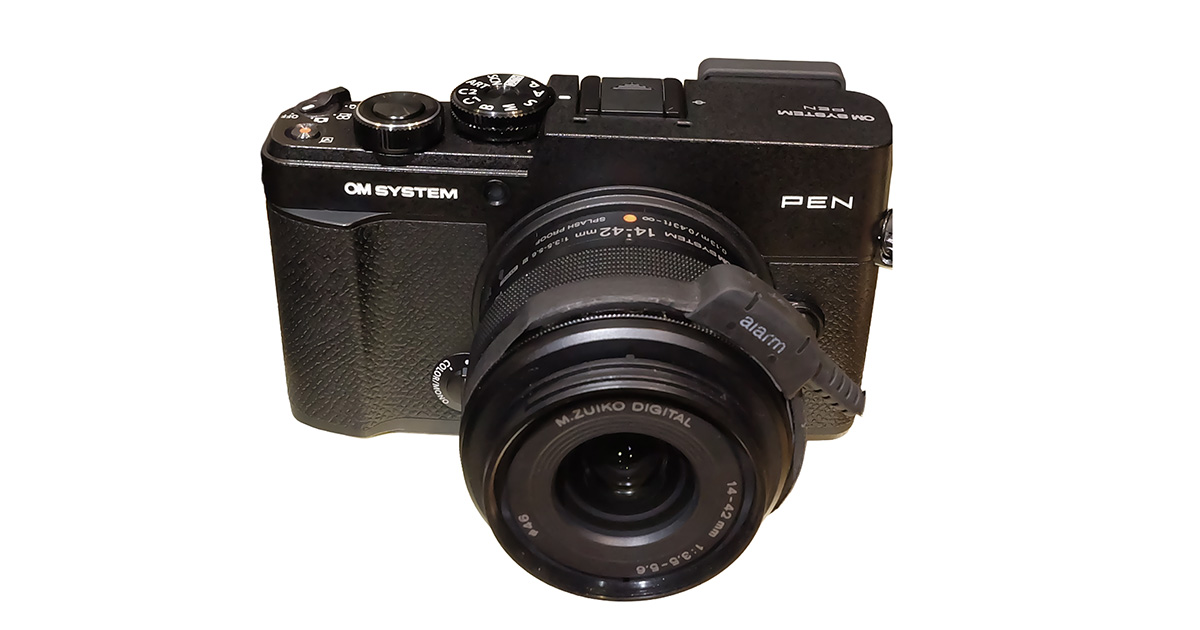
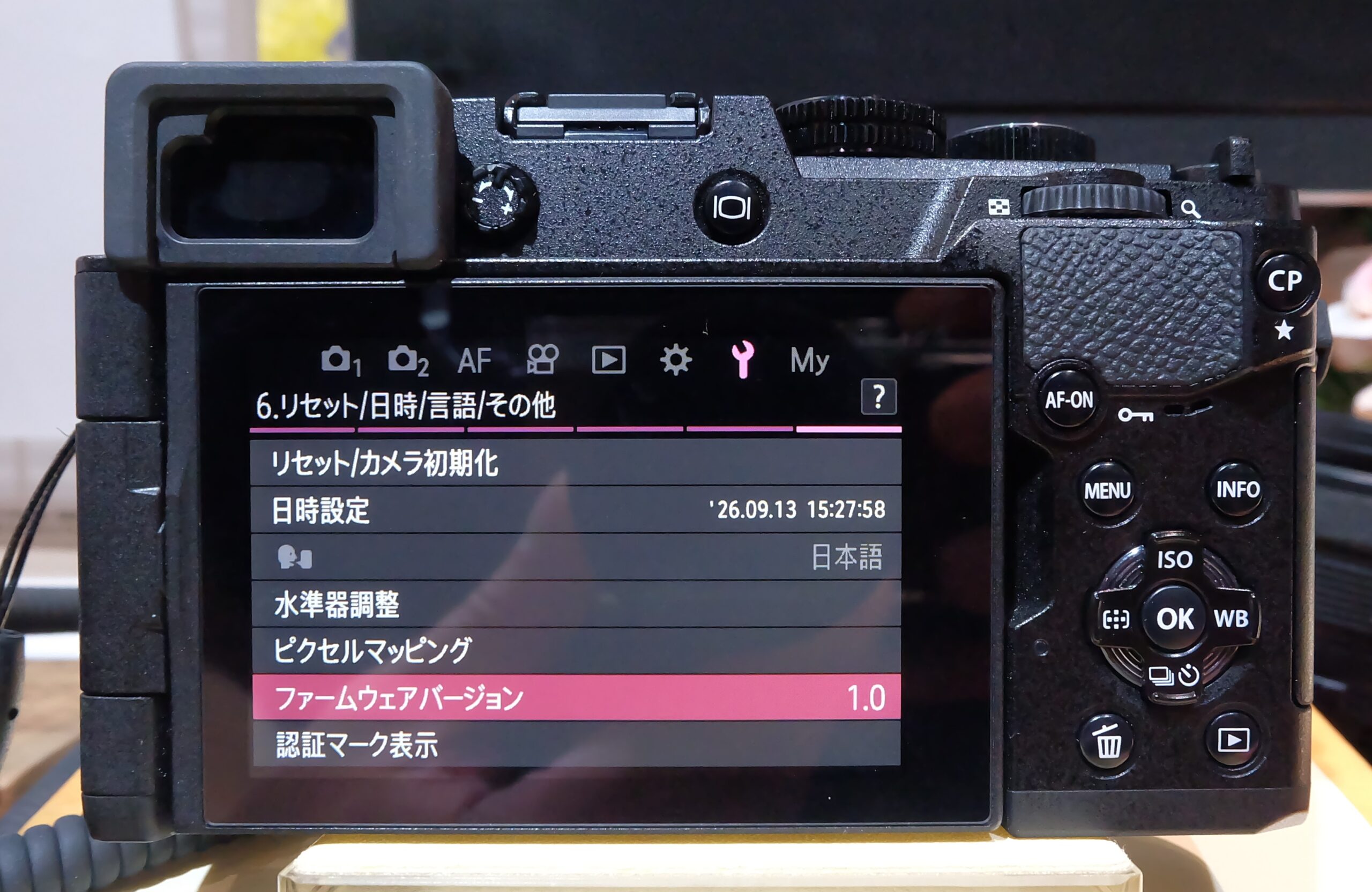
Although the body is small, OM SYSTEM has not stripped away the physical controls. The top plate carries the main mode dial and a large command dial around the shutter area. On the rear is another command dial plus a conventional four-way controller, OK button, MENU and INFO buttons.
There is no dedicated autofocus joystick. On land, the AF point can be moved using the four-way controller or the touch screen. In an underwater housing, the touch screen will normally not be available, so access to the directional controls becomes especially relevant.
The camera also has a dedicated CP button for Computational Photography functions. This gives direct access to High Res Shot, Live ND, Focus Stacking, HDR and Multiple Exposure. OM SYSTEM specifies five computational modes through this button. All exciting, but not too relevant for underwater photographers.
And importantly: a dedicated AF-ON button
This may be the most interesting physical control for photographers who like to separate focusing from taking the picture. The new PEN has a clearly labelled AF-ON button on the rear, positioned to the right of the screen and below the upper rear controls.
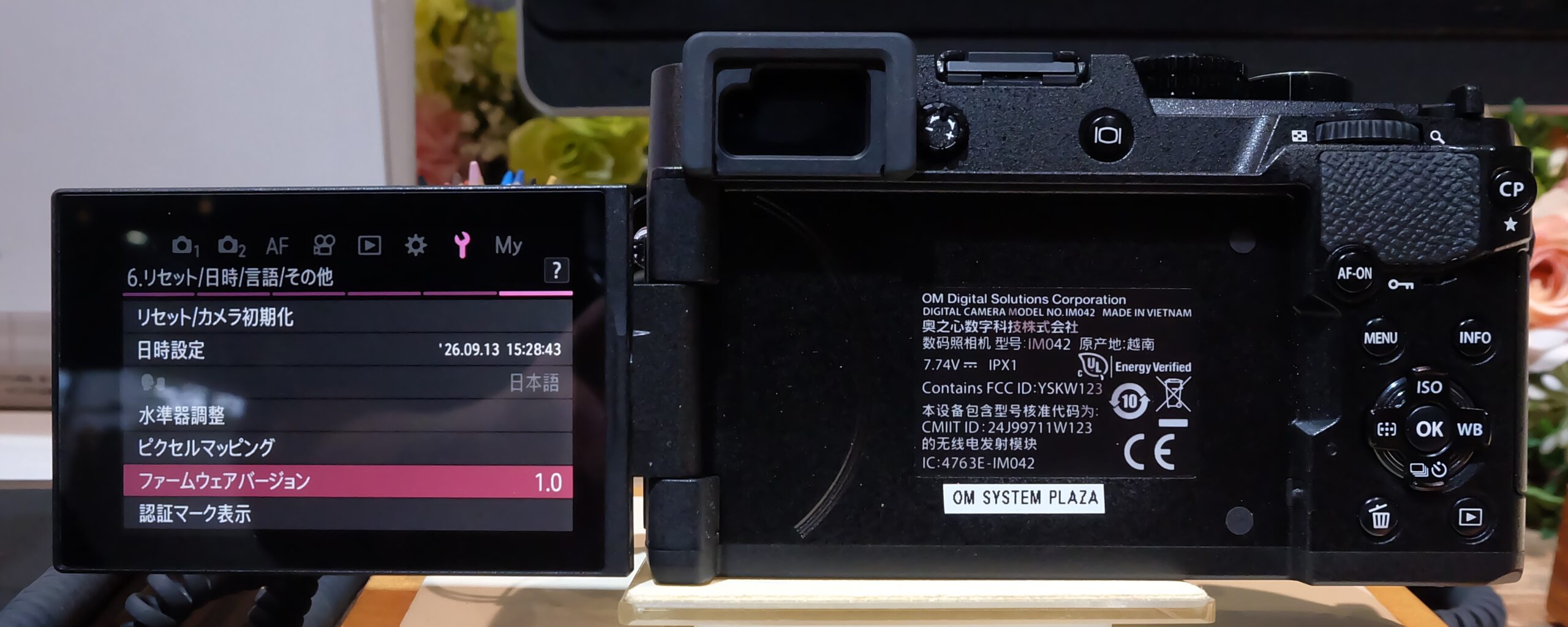
Can the OM SYSTEM PEN use back-button focus?
Everything points to yes. The camera has a dedicated AF-ON button that activates autofocus independently, and the launch documentation describes programmable button functions and separate still/movie control maps. That gives us the hardware and menu structure needed for back-button focusing.
Out of the box, half-pressing the shutter still activates autofocus, as you would expect. For true back-button-only focus, shutter AF also has to be separated from focus activation. The launch manual documents configurable AF/button behaviour, so the camera appears to support that workflow. (I would still verify the exact menu path on a retail production body before treating a step-by-step setup as final.)
For underwater photography this is particularly interesting. Back-button focus can be useful for macro work, super-macro and situations where you want to establish focus independently and then concentrate on timing the exposure. Whether it becomes genuinely comfortable underwater will of course depend on where a future housing manufacturer places the corresponding control. But from my experience, they will take this into account.
Back-button focus is more relevant underwater than it sounds
For many casual photographers, AF-ON is simply another button. Underwater it can be one of the most useful controls on the camera.
With macro and especially super-macro, you may want to establish focus independently and then concentrate on composition and timing. It can also help when autofocus is tempted by the wrong part of a busy subject — an eye, antenna, rhinophore or another tiny detail surrounded by high-contrast background structure.
That is why the dedicated AF-ON button matters. The remaining question is not whether the button exists, but whether a future housing gives it a good, ergonomic control. If AF-ON falls naturally under the thumb, the PEN could offer a genuinely useful back-button-focus workflow underwater.
Autofocus is a major step forward
The PEN offers S-AF, S-AF+MF, C-AF, C-AF+MF, C-AF+Tracking, manual focus, preset MF, Starry Sky AF and Super Spot AF. Focus peaking and magnified focusing are available for manual focusing.
The 121-point AF layout can be used as all-area, single point, small point and several grouped areas, including custom AF areas. Human and Dog/Cat detection are available for still photography. For subjects outside those categories, the normal AF-area and tracking options remain available.
This is relevant underwater because I am not dependent on face or animal detection. I can still place a small or custom AF area exactly where I want it and move the housing around, but keeping the focus spot-on.
Speed and shooting modes
The electronic shutter supports high-speed sequential shooting up to approximately 30 frames per second in selected modes, and the camera also includes Pro Capture. For most underwater photography I rarely need that kind of speed — unless I am shooting fast-moving subjects such as sharks, where a short burst can make sense.
Focus bracketing and in-camera focus stacking are also available, but underwater I honestly do not see much practical need for them. What interests me more is what these features say about the camera itself: it appears to be able to process a lot of image data very quickly. That is potentially more important underwater than the stacking function itself — and I am especially curious to see whether that processing speed remains just as responsive in cold water.
Video: more capable than the body suggests
Video recording includes 4K up to 30p, Cinema 4K at 24p and Full HD options including higher frame rates. The camera supports S&Q recording up to 120 fps, vertical video and OM-Log400 together with OM-Cinema1 and OM-Cinema2 profiles.
A 3.5 mm microphone input is built in, which makes the PEN more useful as a compact hybrid camera than many earlier small PEN bodies. The 5-axis stabilisation also operates during video.
Small body, but a complete Micro Four Thirds system
The body measures approximately 125.8 × 74.5 × 43.3 mm. OM SYSTEM lists the body at 344 g and approximately 393 g in ready-to-shoot configuration depending on the specification used. It uses the Micro Four Thirds mount, giving access to more than 30 M.Zuiko lenses as well as lenses from other Micro Four Thirds manufacturers.
That lens choice is arguably more important than the compact body itself. The PEN can be paired with tiny travel lenses, bright primes, fisheyes or dedicated macro lenses without changing camera system.
The real test: can somebody keep the housing genuinely compact?
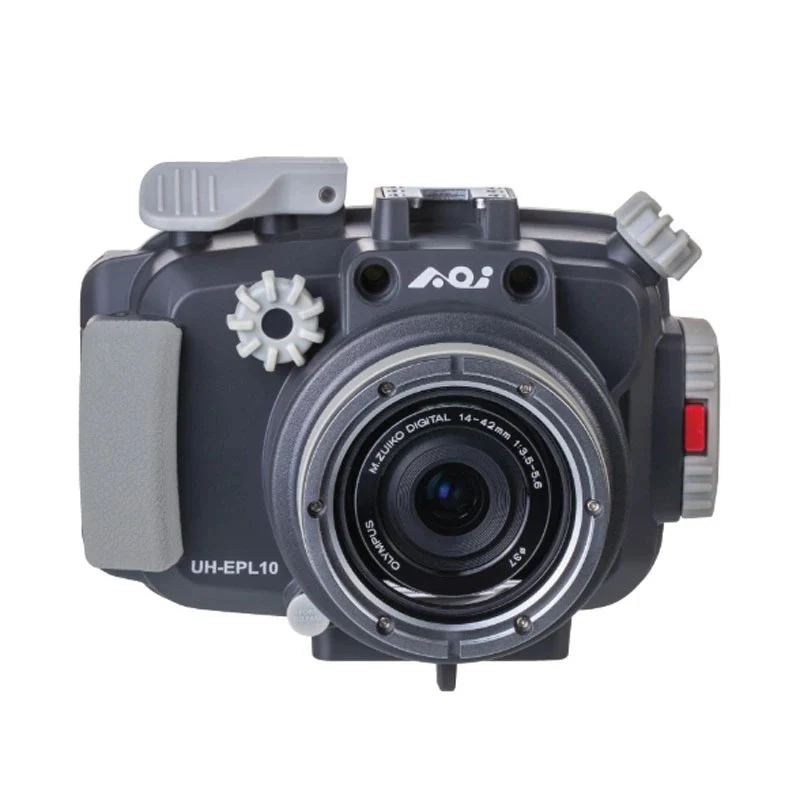
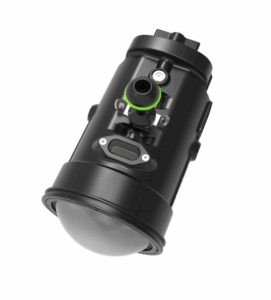
There is a useful precedent here. The earlier Olympus PEN E-PL9/E-PL10 could be used in the compact AOI UH-EPL10 housing. That is the system I had in mind: a small mirrorless camera in a relatively compact polycarbonate housing with access to the camera’s essential controls.
That system sat in an interesting position between a TG-style compact setup and a larger interchangeable-lens housing. Contemporary underwater reviews even described the E-PL10 housing system as only roughly one size larger than a TG-6 setup. The UH-EPL10 also provided housing controls for the mode dial, Fn button, menu, info, arrow pad and other essential camera functions.
This is where the new PEN will really be tested. If Nauticam, AOI, Ikelite or another manufacturer can build a housing that preserves access to the mode dial, both command controls, AF-ON and the directional controls without turning the system into a large conventional mirrorless rig, then the new PEN could occupy a very attractive middle ground: substantially more capable than a TG-7, while still remaining compact enough to travel and dive with easily.
Does it shoot macro as well as the TG-7?
No — not in the same way. The TG-7 is a compact camera with a fixed lens, and one of its great strengths is how close it can focus straight out of the box. The PEN is a mirrorless interchangeable-lens camera, so macro is built around the lens you choose.
If I want a dedicated macro setup, I can fit a true macro lens such as the 60mm Macro or the newer 90mm Macro. That gives me a more traditional interchangeable-lens macro system, with the optical quality and working distance determined by the lens itself.
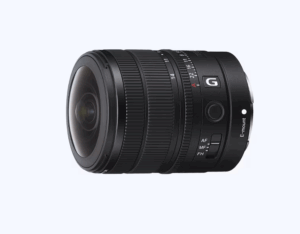
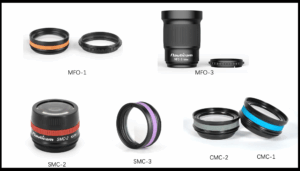
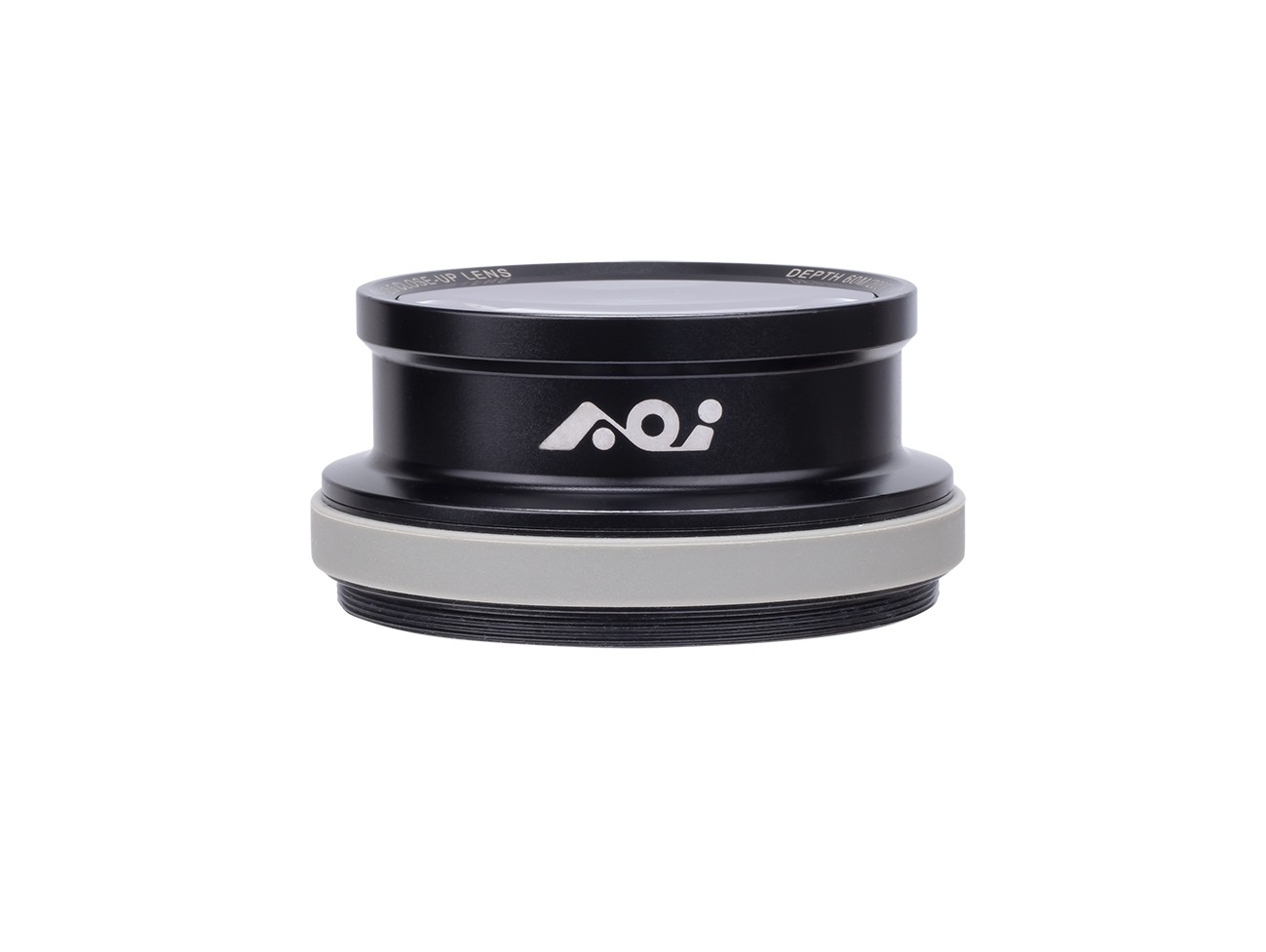
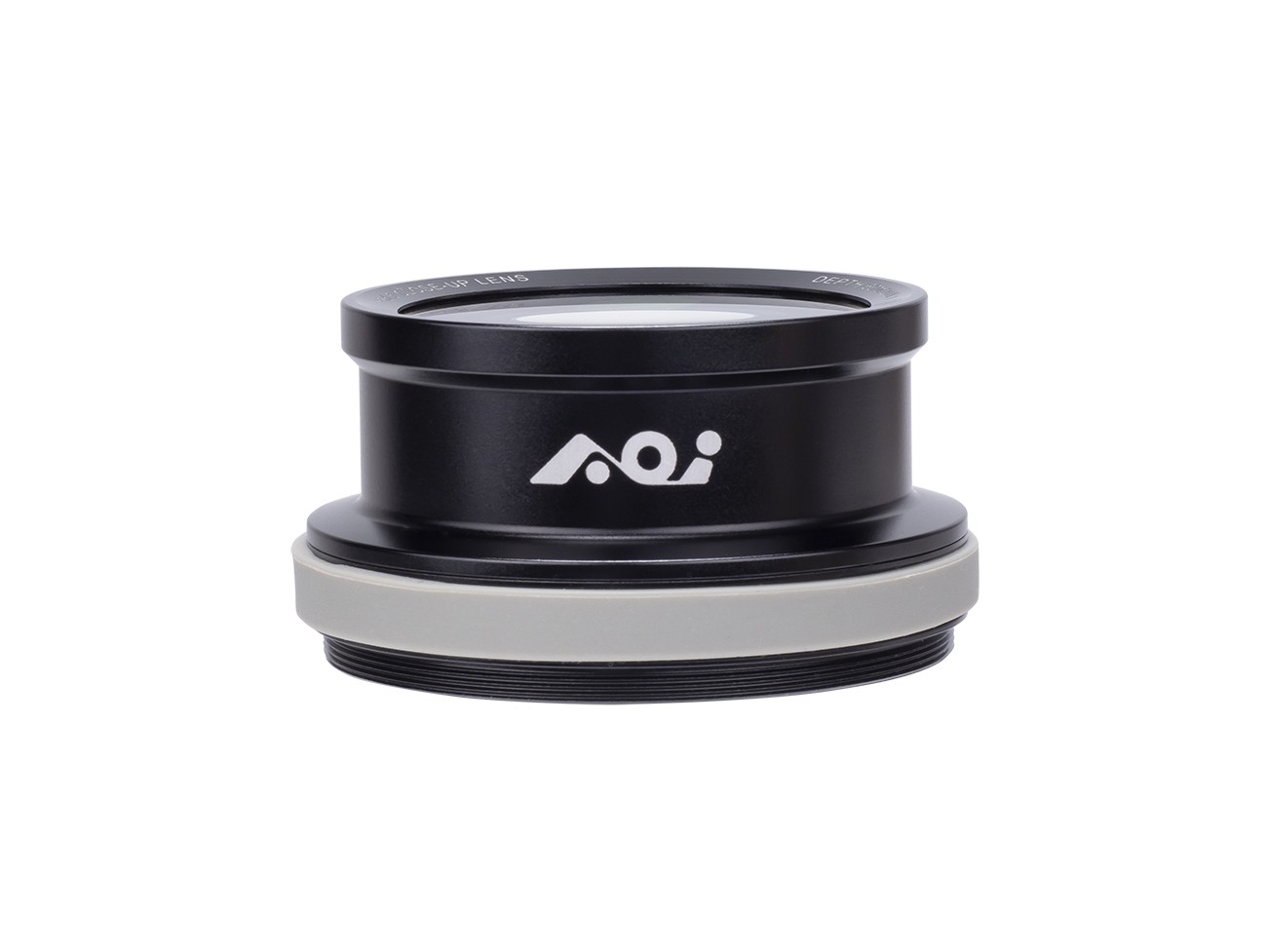
But there is another route that is especially interesting underwater: use the compact 14–42mm kit lens behind a suitable port and add an external wet close-up lens in front. That is the same basic principle used on many larger underwater systems. The advantage is flexibility — I can choose how much magnification I want simply by changing the wet lens.
+12.5 Close-up Lens
+18.5 Close-up Lens — The Nudi Killer
With a moderate close-up lens such as the AOI UCL-09PRO (+12.5), I can add useful macro capability while keeping the setup relatively versatile. If I want substantially more magnification for very small subjects, the AOI UCL-90PRO Underwater (+18.5) pushes the system much further — hence the nickname “The Nudi Killer.”
So compared with the TG-7, the PEN does not give me the same ready-made macro solution. Instead, it gives me a much more modular one: dedicated macro lenses when I want maximum optical performance, or a 14–42mm travel lens combined with interchangeable wet macro optics when I want flexibility underwater.
And what about wide angle?
Of course, I will most likely be able to use lenses such as Olympus’ 8mm fisheye or the 7–14mm wide-angle zoom with the right port setup. But for me, the more interesting option is actually to keep the compact 14–42mm kit lens on the camera and add a really good wet wide-angle lens when I need it.
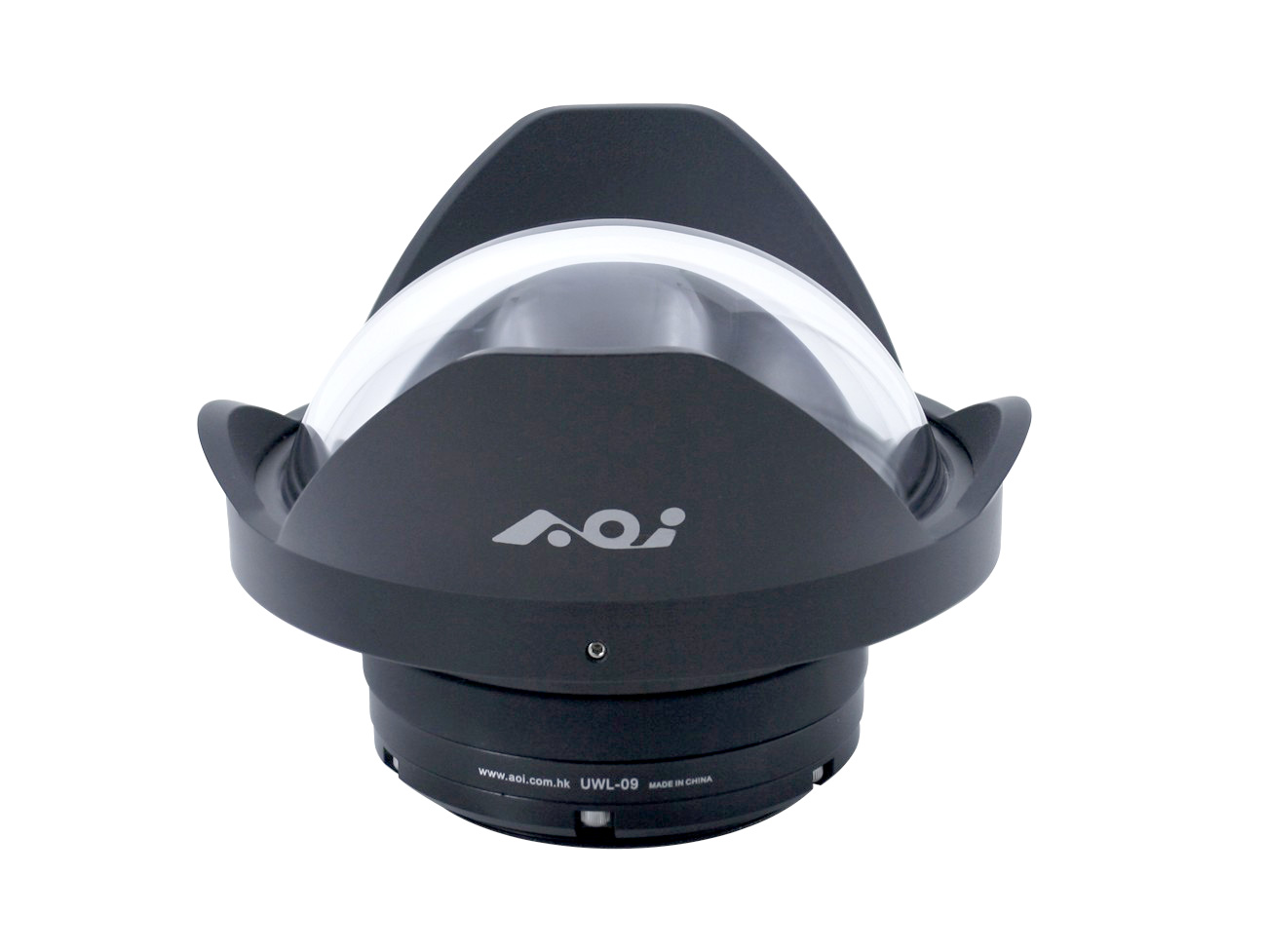
A lens such as the AOI UWL-09 is a good example. It is a 0.45× underwater wide-angle conversion lens that gives up to approximately 130° diagonal field of view with a 28mm equivalent lens. It uses an M67 mount, is rated to 100 metres, and can focus all the way to the front dome. AOI also lists the 14–42mm EZ among the compatible PEN-system combinations for the UWL-09. That means one compact kit lens can potentially cover normal shooting, macro with a wet close-up lens, and wide angle simply by changing the wet optic underwater.
What makes it interesting for underwater photographers?
Hopefully… THE PRICE..!!!
The TG-7 is a great system where you get a lot of underwater camera for little money.
The PEN will surely be more expensive, and the housings likewise. But hopefully it’s at the cheaper end of the scale.
If you look at other OM-models, there are also cheap solutions for camera + housing. Particularly the: E-M10 Mark IV, where the camera is cheaper than the new PEN. But PEN is recent technology and with a cheap AOI housing, it will be among the strongest candidates for an underwater photographer who is looking to update.
But will it be a good system, then?
I have not yet tested the PEN underwater, and housing availability will ultimately decide how relevant it becomes for diving. But on paper, several things stand out to me: full manual exposure, RAW, two command dials, a dedicated AF-ON button, selectable AF areas, focus peaking, a compact Micro Four Thirds body and access to a very mature lens system.
For me, the AF-ON button is particularly important. Small cameras are often attractive underwater because they allow smaller housings, but the compromise can be reduced physical control. The new PEN goes in the opposite direction: the body is compact, yet OM SYSTEM has retained the controls experienced photographers actually use.
The next question is therefore not whether the camera can be handled manually. It can. The real question is what Nauticam, AOI, Ikelite and the other housing manufacturers decide to build around it — and whether all of those useful controls can be reached comfortably underwater.
Key specifications
Here are the specifications if you are looking at the PEN.
Image & sensor
- 20.4 MP Live MOS Micro Four Thirds sensor
- TruePic IX processor
- RAW and RAW+JPEG
- 5-axis IBIS, up to 5.5 stops
- Micro Four Thirds lens mount
Focus & control
- 121-point all-cross-type phase-detection AF
- Human and Dog/Cat subject detection
- Dedicated AF-ON button
- Two command dials
- C1/C2 custom modes and programmable controls
Speed & shooting
- Mechanical shutter to 1/4000 sec
- Electronic shutter to 1/32,000 sec
- Up to approx. 30 fps
- Pro Capture
- Focus bracketing and in-camera focus stacking
- High Res Shot, Live ND, HDR and Multiple Exposure
Body & video
- 2.36M-dot electronic viewfinder
- 3-inch fully articulating touch screen
- 4K/C4K video, S&Q and vertical video
- 3.5 mm external microphone input
- Wi-Fi and Bluetooth LE
- Dustproof and IPX1 splashproof construction
Conclusion
The new OM SYSTEM PEN is easy to dismiss as a stylish travel camera, but when I look at it as an underwater photographer, the specifications tell a different story. It combines a compact body with the controls I normally expect from a much more serious enthusiast camera. And hopefully not with a high price tag.
For a TG-7 user, you can of course dream about a future TG-8, with manual focus.
But to think that it would have a larger sensor, interchangeable lenses, full manual exposure, RAW, two command dials, a modern phase-detection AF system and — yes — a dedicated AF-ON button that makes back-button focus a realistic workflow, I would say… keep on dreaming.
The TG-7 is a low-end compact system, meant to be cheap and entry-level, and it will never bite into the larger models by having some of the features you´d be paying for at a larger system.
But if the housing manufacturers support the PEN with the right housing – it could become one of the most interesting next-step cameras for divers moving beyond the TG-series.
Sources
Technical information is based primarily on OM SYSTEM’s official 2026 PEN product page, technical specifications and launch information. Camera-control observations were cross-checked against the launch manual and current production-body photographs.
OM SYSTEM PEN – official product page
OM SYSTEM PEN – official specifications
OM Digital Solutions – official launch release, 9 September 2026