GN44 output with a wide 120° beam
The Apollo III 3.0 is rated at GN44 and produces a broad 120° beam. The goal is not just maximum output, but strong and even coverage across the frame – especially useful for wide-angle and fisheye photography where edge illumination matters as much as raw power. Marelux uses a relative guide-number measurement method, comparing reference strobes and the Apollo under the same controlled conditions with a Sekonic light meter. That makes the GN figure primarily useful as a comparative indication of output.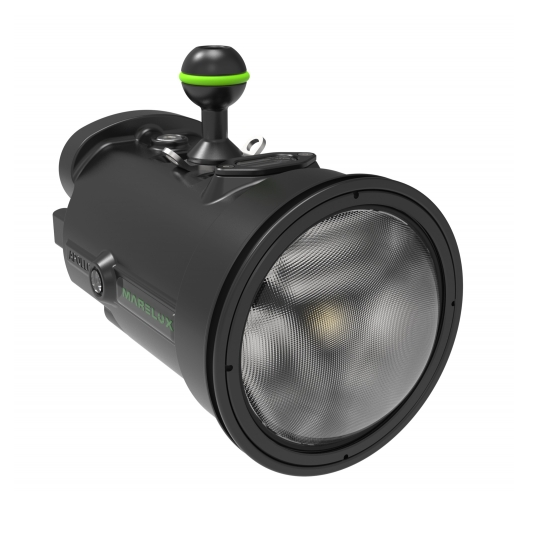
0.6 second full-power recycle time
One of the most impressive specifications is the recycle time. At full power, the Apollo III 3.0 is ready again in just 0.6 seconds. That is exceptionally fast for a strobe in this power class and makes a real difference when shooting action, schooling fish, fast-moving marine life or repeated close-focus wide-angle sequences.MTL mode – up to 20fps
The dedicated MTL mode is designed for high-speed shooting. In this mode, the Apollo can fire at up to 20 frames per second at approximately GN22, with a recycle time of around 0.05 seconds. This opens up possibilities that traditional high-power underwater strobes simply cannot match, especially with modern mirrorless cameras capable of very high burst rates.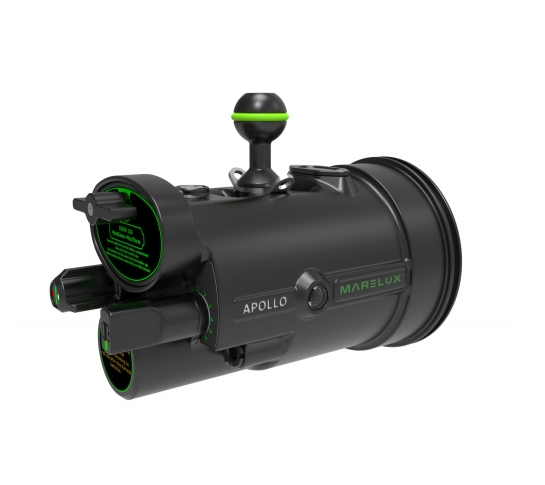
PRE-M mode for compact cameras
The Apollo III 3.0 also includes PRE-M mode, designed to handle compact-camera pre-flash behaviour. Instead of being confused by the camera’s initial pre-flash, the strobe can identify the correct trigger sequence and deliver consistent flash output. This makes the Apollo much more versatile across different camera systems and triggering methods.Broad compatibility and multiple flash modes
The main mode dial includes:- OFF
- TEST
- MANUAL
- TTL
- HSS
- RC
- PRE-M
- MTL
3,000-lumen target and video light
The built-in light is significantly more capable than the small focus lights found on many strobes. It produces up to 3,000 lumens, with CRI 95 and a colour temperature of approximately 5500K. That makes it useful not only as a target light, but also as a practical short-duration video or modelling light.Triple-tube flash design
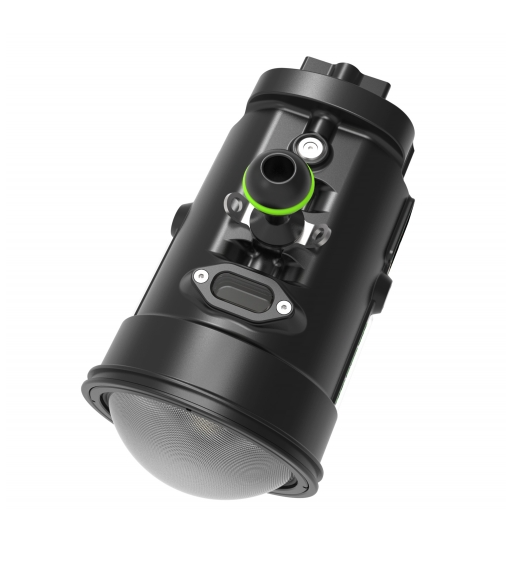
The Apollo III 3.0 uses a triple flash-tube design behind a beaded dome lens. The flash tubes are designed for durability and have been tested to approximately one million flashes. The combination of multiple tubes and the diffuser design is intended to produce a broad, even beam while maintaining high output.High-drain 18650 batteries
Another feature we like is the battery system. The Apollo III 3.0 uses three high-drain 18650 lithium-ion batteries rather than a proprietary battery pack. These are not ordinary low-current 18650 cells: the Apollo series requires high-current batteries capable of supplying the discharge current needed for its fast recycle times and high-speed burst modes. For our own Apollo setups, we use the Nitecore IMR18650 3100mAh high-drain batteries. They are rated for 20A continuous discharge and up to 35A pulse discharge, making them suitable for the high current demands of the Apollo strobes. For travelling underwater photographers, that is a significant practical advantage. Spare batteries are easy to source, easy to replace and much easier to manage on longer trips.Encrypted wireless triggering
Marelux has also built in encrypted wireless triggering with a stated range of up to 15 metres. This can be useful for off-camera lighting setups, remote strobes and more creative lighting configurations where traditional optical triggering becomes limiting.Designed for fast modern cameras
The most interesting thing about the Apollo III 3.0 is not one individual specification, but the combination of them. GN44 output, 0.6-second full-power recycling, 20fps burst capability, multiple trigger modes, 3,000-lumen continuous light and high-drain 18650 batteries put it in a very different category from a conventional underwater strobe. Modern mirrorless cameras are getting faster and faster. Until now, the strobe has often been the limiting factor. The Apollo III 3.0 is clearly designed to reduce that limitation.Who is the Apollo III 3.0 for?
This strobe is particularly interesting for:- Wide-angle and fisheye photographers who need high output and broad coverage
- Fast-action photographers shooting marine life in bursts
- Photographers using high-frame-rate mirrorless cameras
- Users who want both a powerful strobe and a capable target/video light
- Travelling photographers who prefer replaceable high-drain 18650 batteries
Our first impression
The Marelux Apollo III 3.0 looks like a very serious step forward. It is not simply about more flash power. The combination of speed, flexibility and practical battery design is what makes it interesting. For photographers who regularly miss a shot because their strobes cannot recycle quickly enough, or who want to take advantage of the high burst rates of modern cameras, the Apollo III 3.0 could be one of the most interesting new strobes on the market.Interested in the Marelux Apollo III 3.0?
The Marelux Apollo III 3.0 underwater strobe is available from FOTOGRAFIT.eu. You can see the current price and availability on the product page.
A strobe setup is more than the flash itself. If you are considering the Apollo III 3.0, we are happy to help you put together the complete lighting setup — strobes, batteries, trigger or TTL solution, fibre-optic or electrical connection, arms, clamps and accessories — and give you a clear overview of the total cost before you order.
We are here to help. Tell us which camera and housing you use, what you normally photograph and how you want to trigger the strobes, and we can help you work out what you actually need.