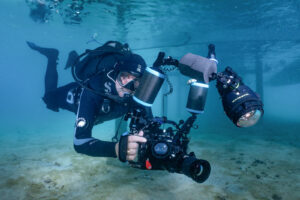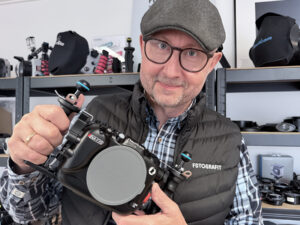
Could the Panasonic LUMIX L10 be one of the most compelling compact underwater cameras available today? On paper, it has almost everything an ambitious underwater photographer could ask for: a relatively large sensor, a bright Leica zoom, modern phase-detection autofocus, serious video specifications and — crucially — a Nauticam housing supported by excellent wide-angle and macro wet optics. But there are a few important compromises to consider before calling it the perfect compact system.
For me, the real story is not simply the camera. It is what the camera can become underwater when paired with Nauticam’s N50 system. Let’s look at what makes this combination so interesting — and where it may not be the right choice.
A compact camera with genuinely serious photographic potential
The L10 uses a 26.5-megapixel backside-illuminated Four Thirds sensor in a multi-aspect design, recording images at up to approximately 20.4 megapixels. The effective imaging area is smaller than a full Four Thirds frame, but still significantly larger than that of most conventional compact cameras. That promises welcome potential for dynamic range, detail and cleaner files at higher ISO settings — particularly valuable when ambient light is limited underwater.
Its built-in Leica DC Vario-Summilux 24–75mm-equivalent f/1.7–2.8 zoom covers a useful everyday range without requiring interchangeable lenses. The wide maximum aperture is attractive in low light, although underwater photographers should remember that close-focus work often calls for smaller apertures and additional lighting.
The camera also brings phase-detection autofocus with AI-assisted subject recognition, optical image stabilisation, RAW capture and advanced video options including 5.6K and high-frame-rate 4K. These capabilities make it an appealing hybrid for photographers who also shoot video.
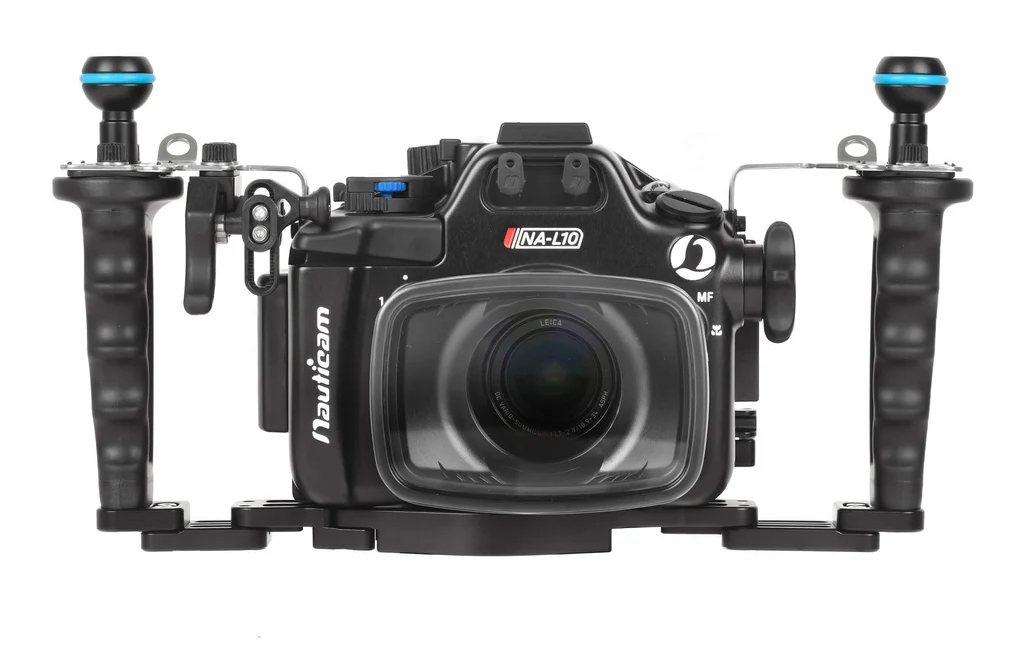
Nauticam NA-L10: compact housing, full control
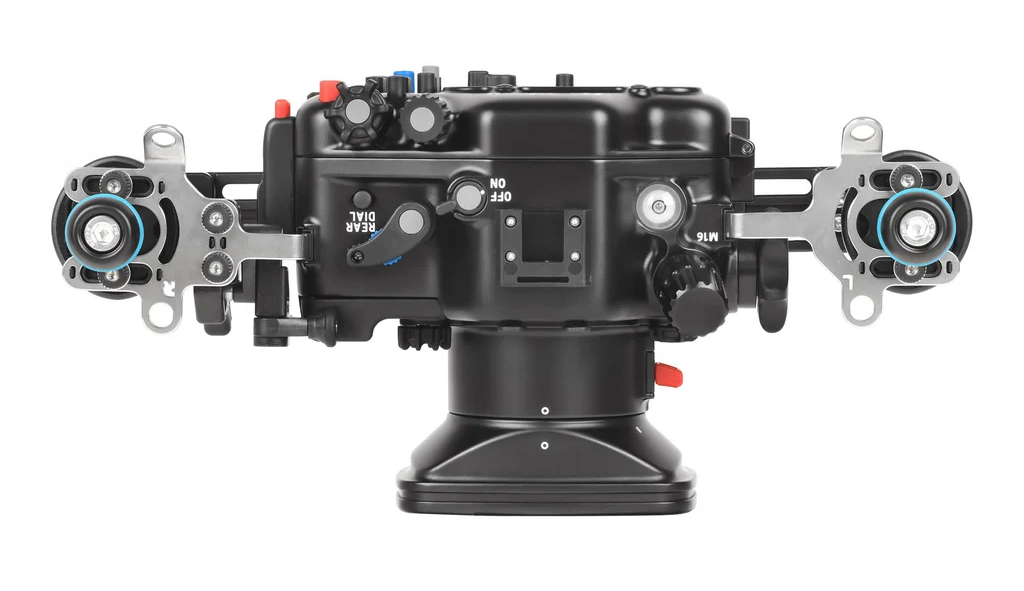
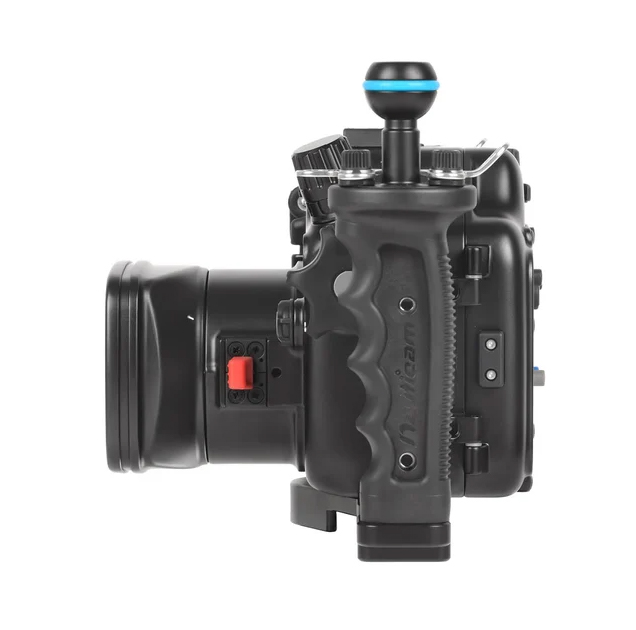
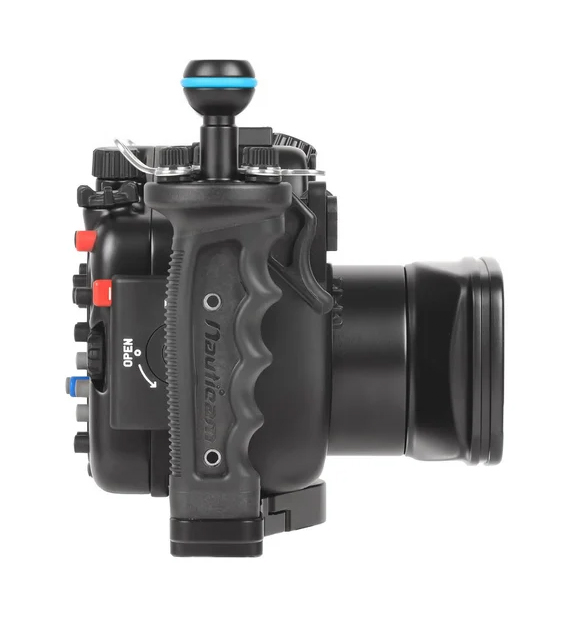
Nauticam has built a dedicated aluminium housing around the L10, with controls placed for operation underwater rather than merely copied from the camera body. Its rotary locking mechanism makes camera installation and battery or memory-card changes straightforward. The housing is depth-rated to 100 metres, and the N50 port system is the key to its versatility.
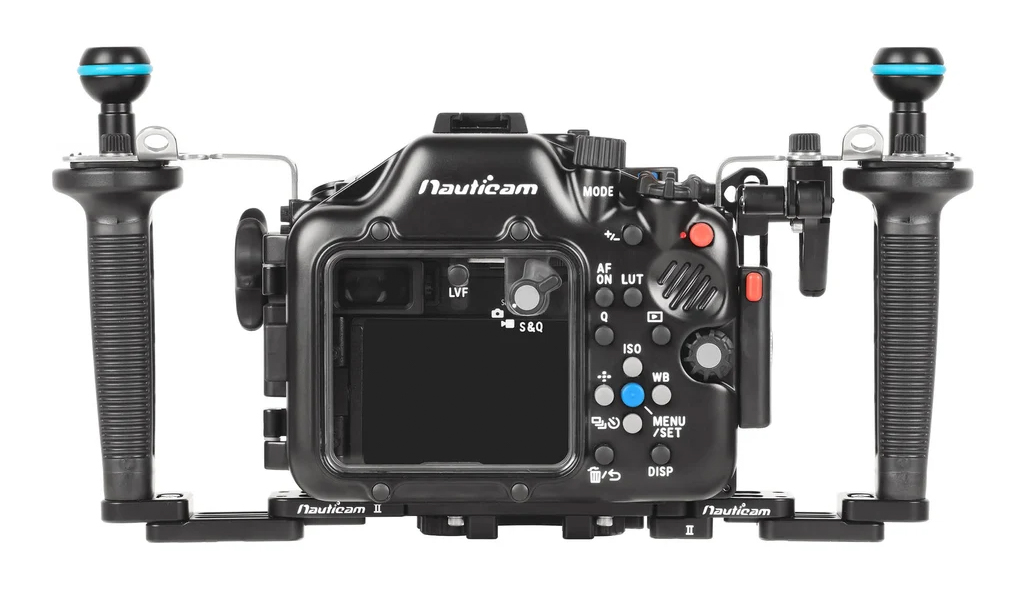
The integrated vacuum monitoring and leak alarm electronics are standard; the Pro Package includes the vacuum valve installed. That is particularly reassuring when changing batteries or memory cards during a busy dive day. Of course, a successful vacuum test is an extra precaution, not a substitute for inspecting and maintaining the O-rings.
Wide angle: this is where the L10 becomes especially exciting
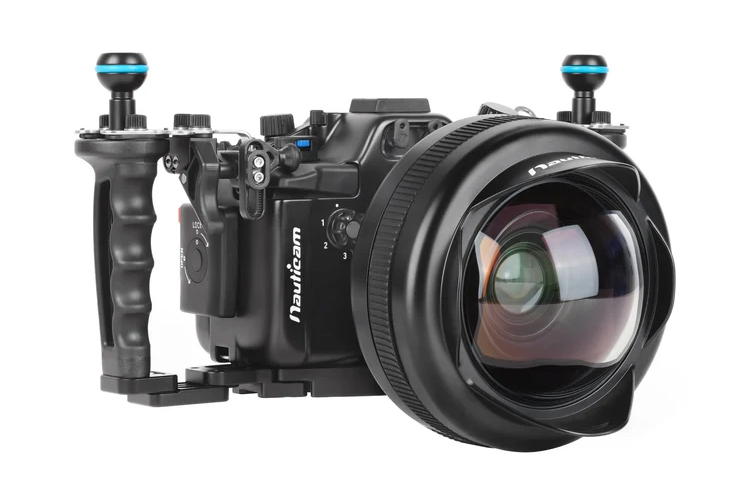
A 24mm-equivalent setting might sound reasonably wide on land, but a conventional flat port narrows the usable underwater field of view. Nauticam solves that problem with dedicated short ports and its water-contact optics. The WWL-C with N50 Short Port 22 (38704) reaches a stated 130° field of view at the wide end, operating over approximately 24–30mm equivalent zoom. That is an excellent match for reefs, wrecks, divers and large marine life.
The WWL-1B is another possibility, but choosing the correct port is important: Port 38703 is designed for WWL-1B over approximately 28–40mm equivalent; Port 38704 also supports WWL-1B over a shorter zoom range. These combinations should not be treated as interchangeable without checking Nauticam’s port chart.
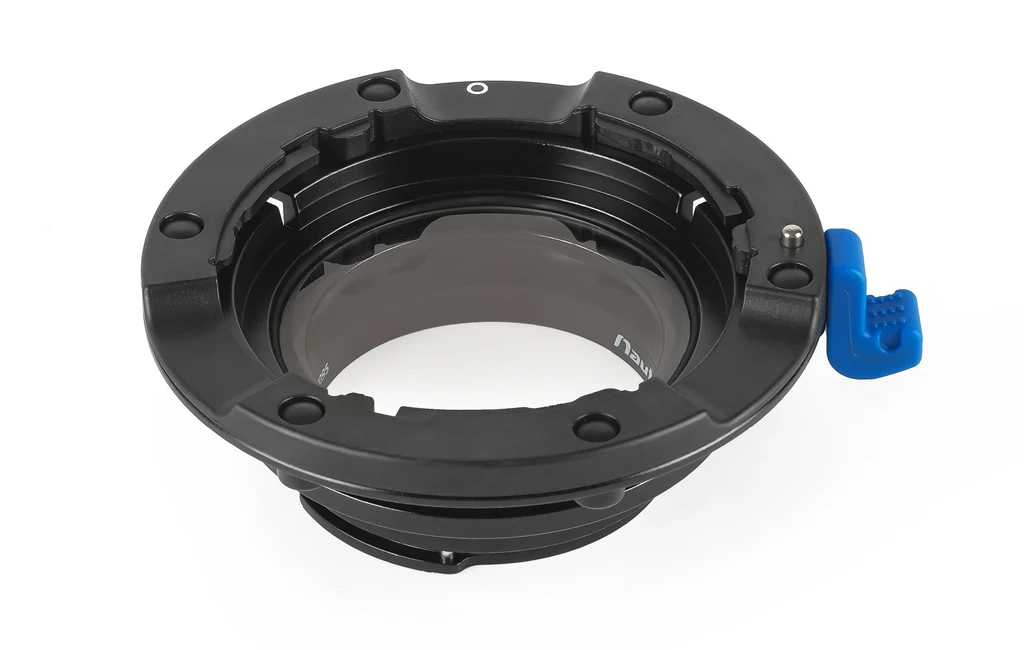
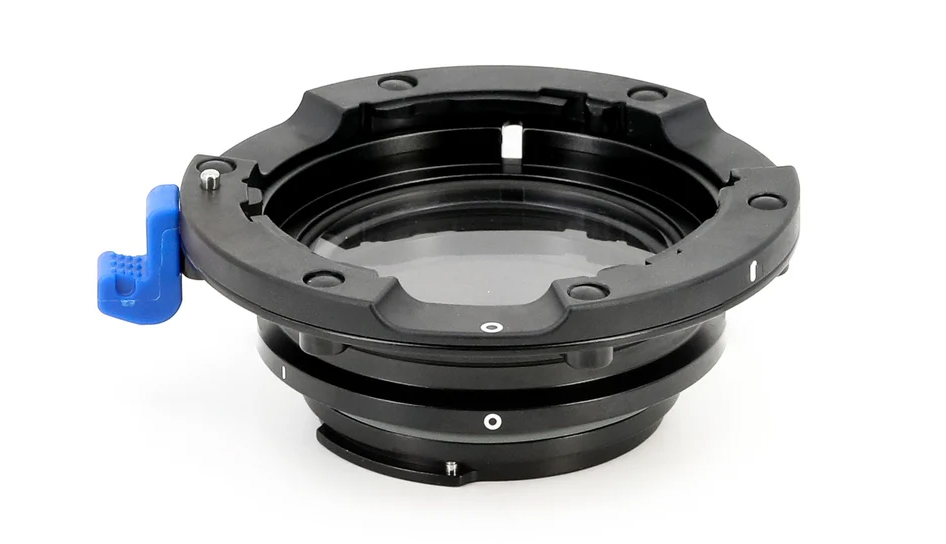
There is also an N50 3.5-inch acrylic dome port (38702) that retains the camera’s 24–75mm zoom range. It is a useful alternative for those who prefer the camera’s native zoom flexibility rather than the extreme coverage of a wet wide-angle lens.
Macro: from small subjects to the tiniest details
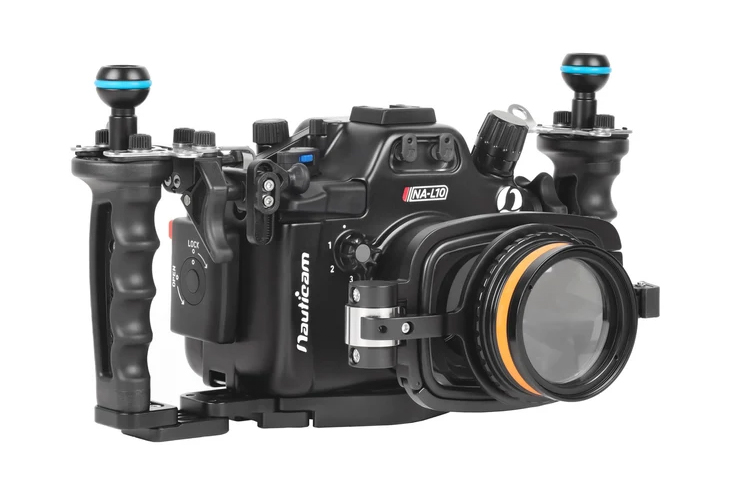
At the other end of the spectrum, Nauticam supports the CMC-1, CMC-2 and MFO-1 with the standard port and M67 flip holder (25107). This is a particularly attractive approach: shoot your normal subjects with the standard port, then flip a close-up optic in front of the lens when you find something small.
The CMC-2 is a sensible starting point for photographers who want strong close-up capability without immediately moving into the most demanding super-macro territory. The CMC-1 offers greater magnification but requires more precise focusing and camera positioning. The MFO-1 offers a different creative range for medium-sized close-up subjects. The best choice depends on what you photograph and how comfortable you are working at short distances.
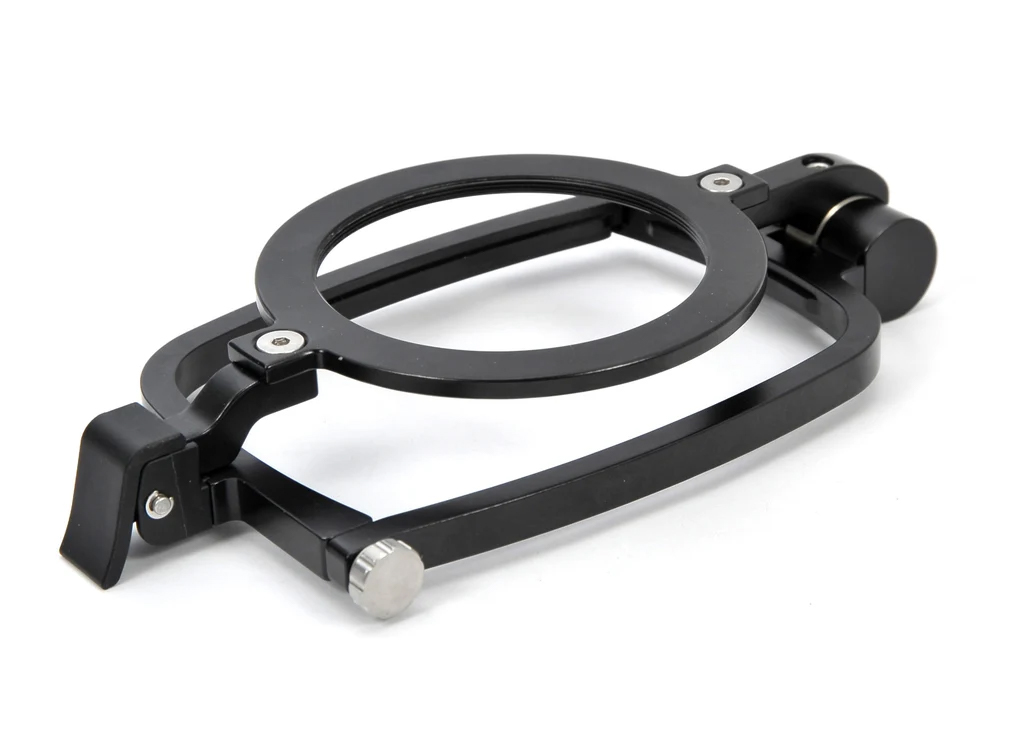
One caveat: unlike the TG-7, the L10 does not have a dedicated microscope-style shooting mode. For very small subjects the right wet optic, good buoyancy control and careful lighting matter far more than the camera’s headline sensor specification.
Viewfinder and underwater handling
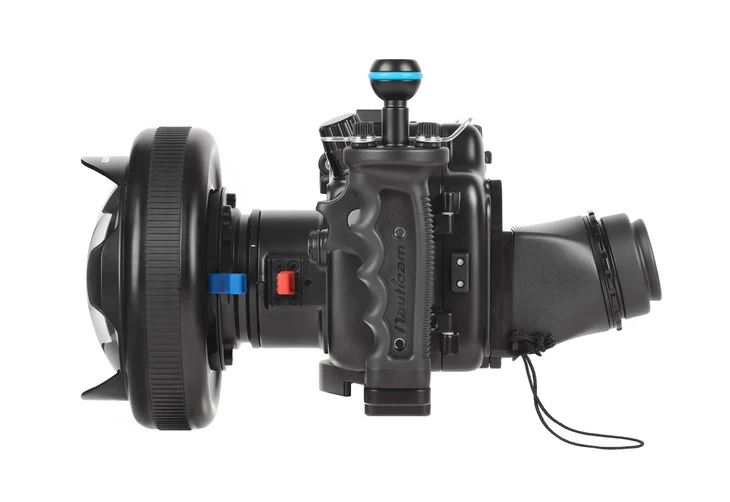
The L10 has a built-in electronic viewfinder and an articulated rear display on land. Underwater, however, viewing and ergonomics depend on the housing and accessories. Nauticam offers LCD magnifier rails (25133) and an optional dioptre-adjustable LCD magnifier (25106). The configuration shown here is useful for photographers who want a larger, clearer view of the rear display — but an LCD magnifier should not be confused with an optical extension of the camera’s electronic viewfinder.
Manual exposure control for serious underwater flash photography
The LUMIX L10 provides independent manual control of ISO, aperture and shutter speed. Choose M (Manual Exposure), then select a fixed ISO value rather than the default AUTO ISO setting.
Adjust aperture with the lens aperture ring (or with the rear dial when the ring is at A), and set shutter speed separately with the camera’s control dial. This allows you to balance external strobe light on the subject against natural light in the background.
For example, ISO 100, f/8 and 1/125 sec can be a starting point with manual external strobes. Adjust strobe power for the foreground and shutter speed to lighten or darken the background. These are starting values, not a universal exposure recipe.
For flash photography, use the mechanical shutter, not the electronic shutter. The camera’s 1/2000 sec maximum mechanical shutter speed is not its guaranteed flash-sync speed. Check the actual synchronization limit and triggering compatibility with the Nauticam Mini Flash Trigger 26309 and your strobes; do not assume TTL support.
External strobes: don’t overlook the trigger
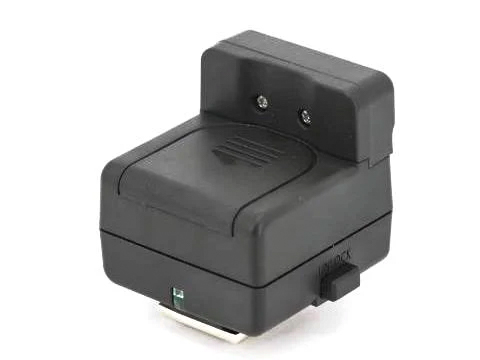
For serious underwater photography, external lighting remains essential. Nauticam lists optical strobe triggering via its Mini Flash Trigger 26309, with a housing serial-number compatibility condition beginning at A573875. This is an accessory to plan for, not something to assume is included in the Pro Package. Check trigger and strobe compatibility when building a system.
The Pro Package: what is included?
The NA-L10 Pro Package (17723P) includes the housing with standard N50 port, Flexitray with left and right handles, two mounting balls, shutter-release extension, installed M16 vacuum valve, moisture alarm battery, spare O-ring and maintenance accessories, and a padded bag. The camera, wet lenses, alternate ports, lighting, and mini flash trigger are sold separately.
With tray and handles, Nauticam specifies dimensions of approximately 310 × 171 × 159mm and an in-air weight of 2.12kg. Its published underwater buoyancy figure is approximately −0.64kg with the camera and battery, before assuming a particular full lighting and wet-lens setup. So, yes, this is a compact camera system — but the complete rig is no longer pocket-sized.
Is it really one of the best compact underwater options?
My assessment: absolutely one of the most interesting — but not automatically the best for everyone. Compared with a TG-7, it offers a much larger effective sensor, better control over depth of field and stronger potential for demanding image-making. The TG-7 remains smaller, simpler, more affordable as a complete underwater setup, and impressively capable at close range. Compared with premium Type 1 sensor compacts, the L10 combines a larger imaging area with a bright zoom and modern autofocus. Against a small mirrorless system, however, the fixed lens limits your options and the total Nauticam setup cost can narrow the gap.
The strongest argument in its favour is the possibility of building one relatively manageable rig for good wide-angle images, flexible general photography and serious macro — with the right ports and wet optics. That is precisely the kind of versatility I value in a travel-oriented underwater camera.
There is one more important distinction: the L10 is new, and these conclusions are based on its specifications and supported Nauticam configurations, not on an extended personal underwater field test. Real-world autofocus performance with fish, practical focus distances behind each port, and overall handling still deserve verification in the water.
Final thoughts
Panasonic has brought the premium zoom compact camera back into a very interesting position. In combination with the Nauticam NA-L10, the LUMIX L10 has a credible claim to being one of 2026’s most appealing serious compact underwater camera systems. It is not the cheapest, smallest or most specialised option. But for photographers who want high image quality and the freedom to switch between wide-angle and macro without changing camera lenses, this could be an unusually well-balanced choice.
Interested in building an L10 underwater system? Contact FOTOGRAFIT for advice on the housing, correct N50 port, WWL-C or WWL-1B, macro optics and compatible flash triggering. Choosing the right combinations from the outset makes a substantial difference.
Build your L10 underwater photography system
Explore the compatible housing, wide-angle optics, macro accessories and manual flash trigger at FOTOGRAFIT. The Pro Package already includes the tray, handles and vacuum valve. Please check the correct port combination before ordering: WWL-C is paired with port 38704, while WWL-1B can use port 38703 or 38704 at the respective supported zoom settings.
HOUSINGS
WIDE ANGLE
MACRO
STROBE TRIGGER
Need help choosing? Contact FOTOGRAFIT for advice on a complete setup tailored to your underwater photography.