We love selling great underwater photo gear.
But there is honestly not much satisfaction in selling you the exact same piece of equipment twice, simply because the first one is now lying somewhere on the seabed. It is much more fun to sell you something new.
Good underwater camera gear safety is simple: secure your gear. Anything that can fall off should have a backup.
Why underwater camera gear gets lost at the surface
People often imagine that equipment gets lost during the dive. In reality, a lot of it disappears at the surface.
Underwater, your equipment is partly supported by buoyancy. But when it is lifted out of the water, handled in waves, passed to a boat or moved around at the surface, the full weight suddenly comes back onto the system. That is when something can twist, loosen or drop off — often without you noticing.
For scuba divers this is annoying, but often manageable: if something falls to the bottom, you may already be close enough to retrieve it.
For freedivers, it is a very different story. A dropped light, lens or accessory may suddenly be several metres below you, and you have to dive all the way down from the surface to get it back. Sometimes that simply is not practical.
1. Secure your underwater camera system
The first level of security is the complete housing and rig.
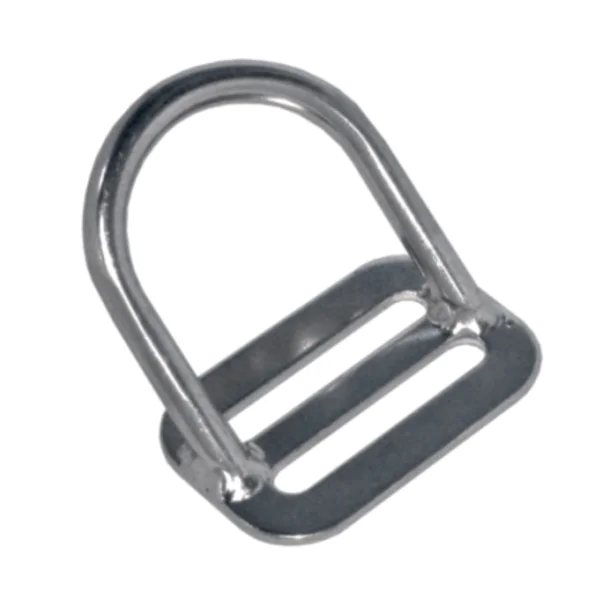
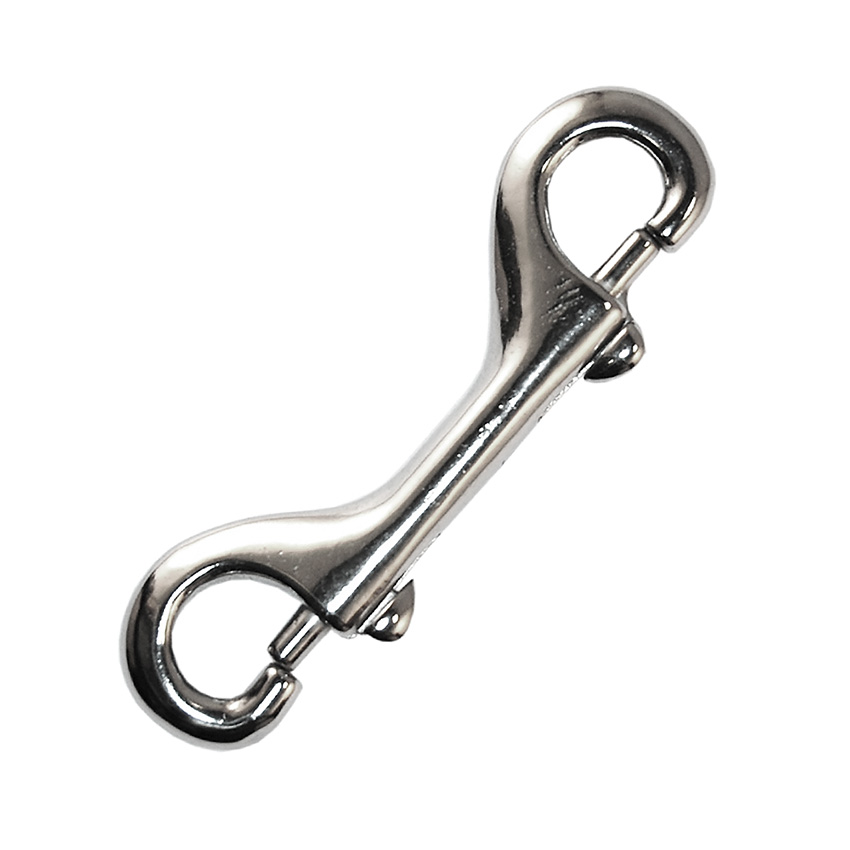
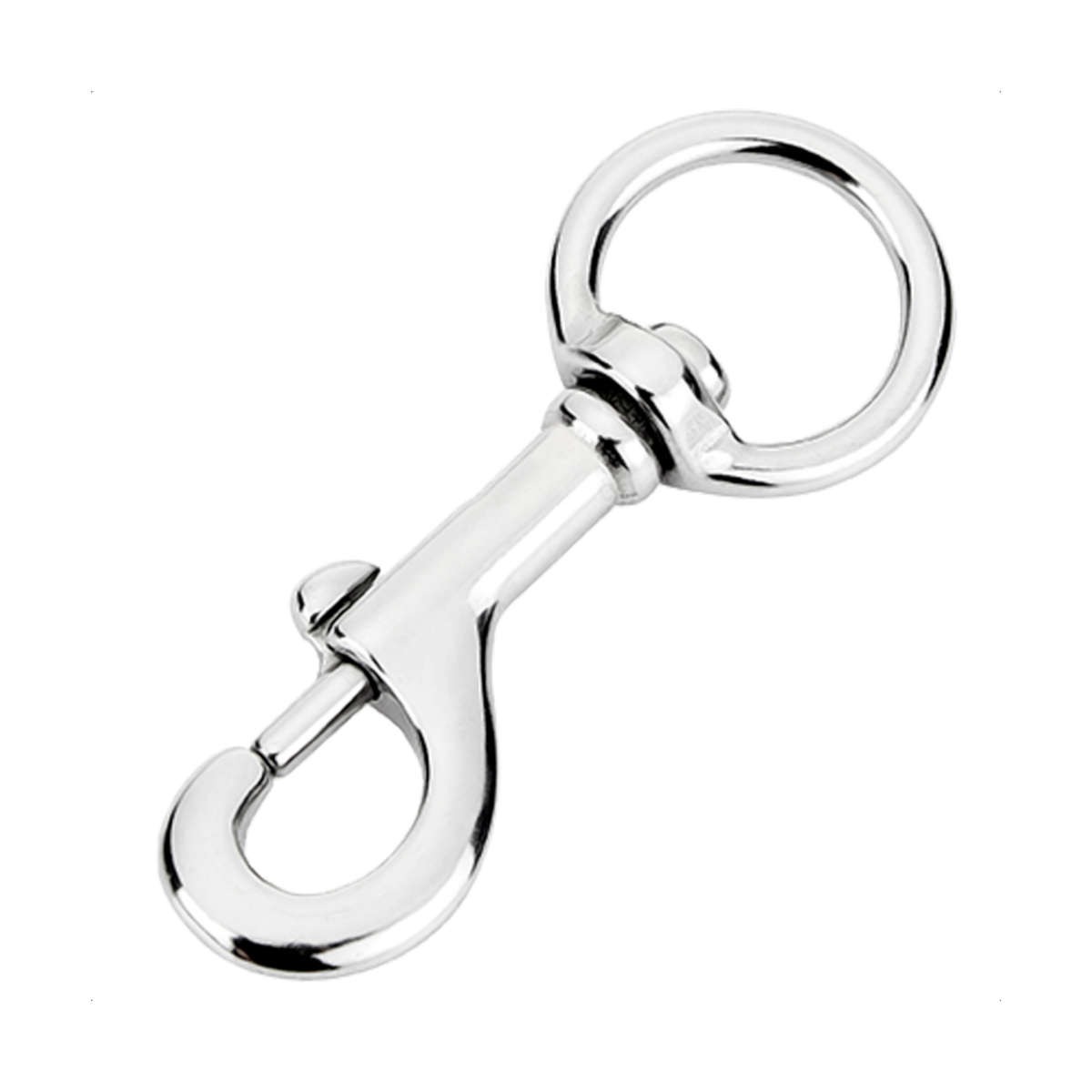
Use a shockline or coiled lanyard, connect it to a solid D-ring on your BCD or harness, and use a proper bolt snap.
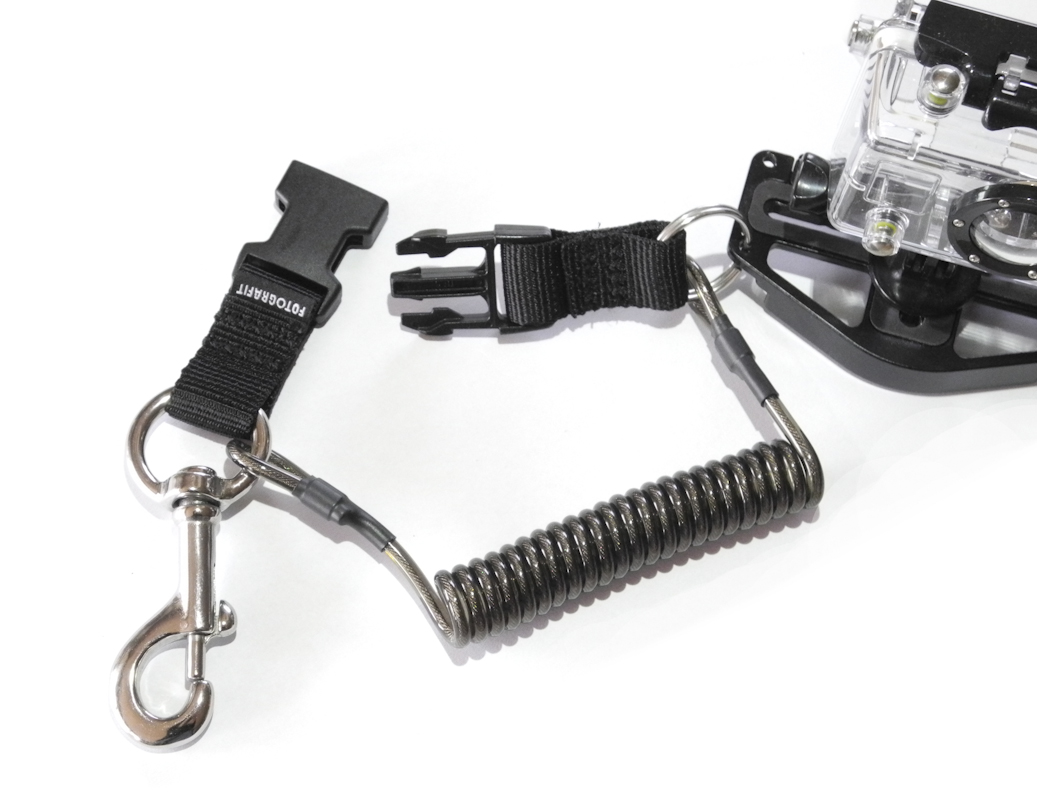
The idea is simple: if you let go of the camera for a moment — in waves, during entry or exit, or while handling other equipment — the entire system stays attached to you.
It is cheap insurance for expensive gear.
2. Secure small underwater camera accessories
The second level is all the smaller accessories attached to the rig:
- wet lenses
- video lights and focus lights
- cold shoe mounts
- small adapters and brackets
- anything that is screwed onto the system and can therefore also unscrew itself
If it can be screwed on, it can in principle also come loose again.
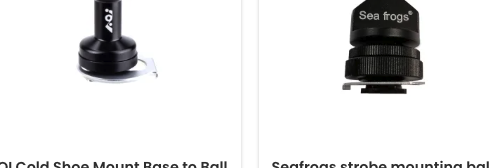
Cold shoe safety – retaining wings add extra security
Many underwater cold shoe mounts have small “wings” or retaining tabs on the mounting foot. These extend over the edges of the cold shoe base on the housing.
That means that even if the mount starts to loosen, it cannot simply slide straight out of the cold shoe. The wings act as a mechanical stop and give you an extra level of security.
It is still a good idea to check that the mount is properly tightened before every dive — but this small design detail can make the difference between a loose accessory and a lost one.
Why arm balls and clamps are usually secure
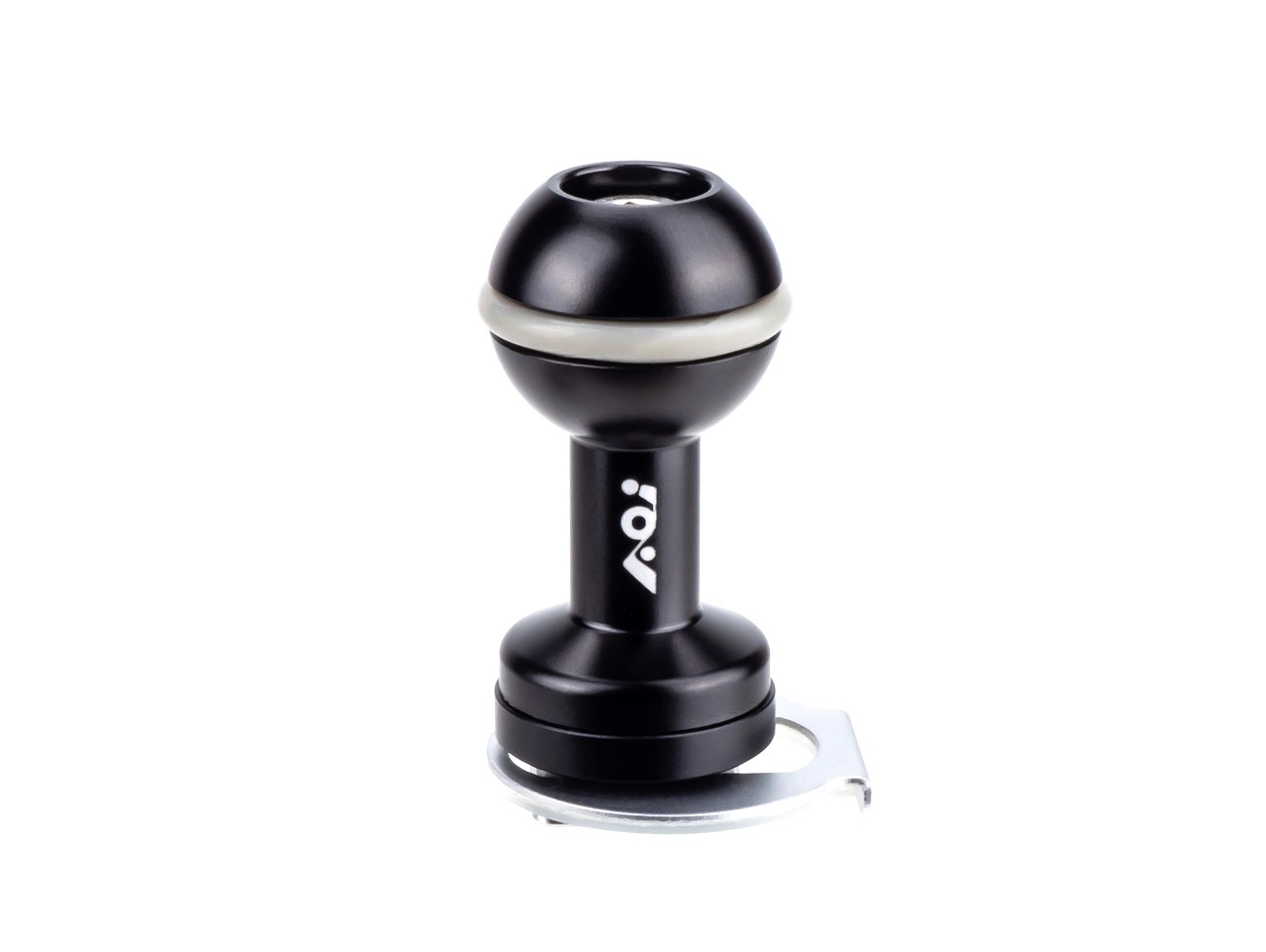
A properly mounted arm ball in a well-functioning clamp does not simply fall out during a dive.
The reason is mechanical: the ball cannot physically pass through a correctly tightened clamp. If the clamp is working properly and is tightened correctly, the ball stays where it belongs.
What can come loose is usually the accessory attached to the arm system — a light, cold shoe, adapter, wet lens holder or another part that is screwed onto something else.
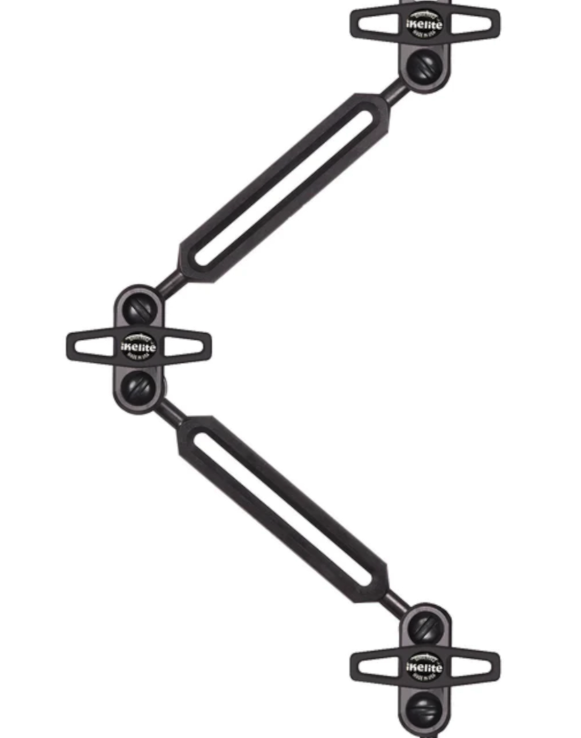
Keep your clamps clean, rinse them after every dive and use a small amount of suitable grease where appropriate. They will work better, last longer — and they will not squeak and howl when you assemble your rig.
Use safety lines and lanyards as a backup
Even when the main mounting is solid, small accessories can still loosen.
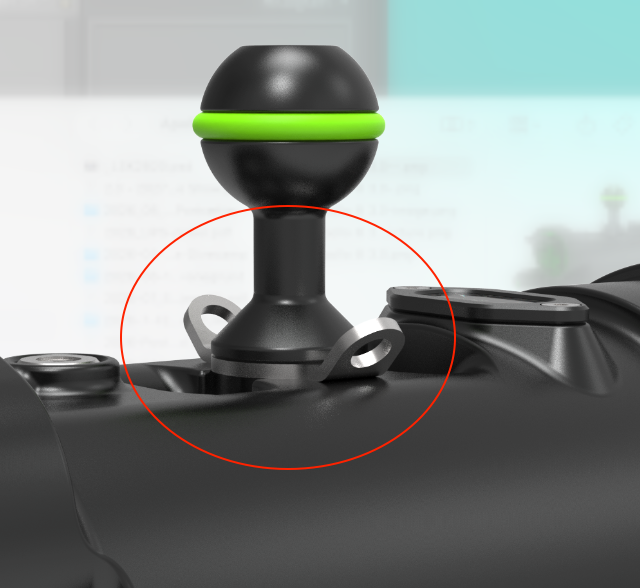
That is why many strobes, lights, mounts and wet lenses have a small eye or attachment point. It is there for a reason.
Use a thin safety string or lanyard as a secondary connection. If the main attachment fails, the accessory remains attached to the rig instead of disappearing into the water.
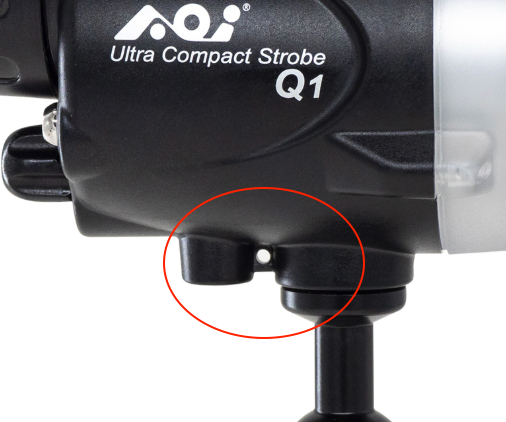
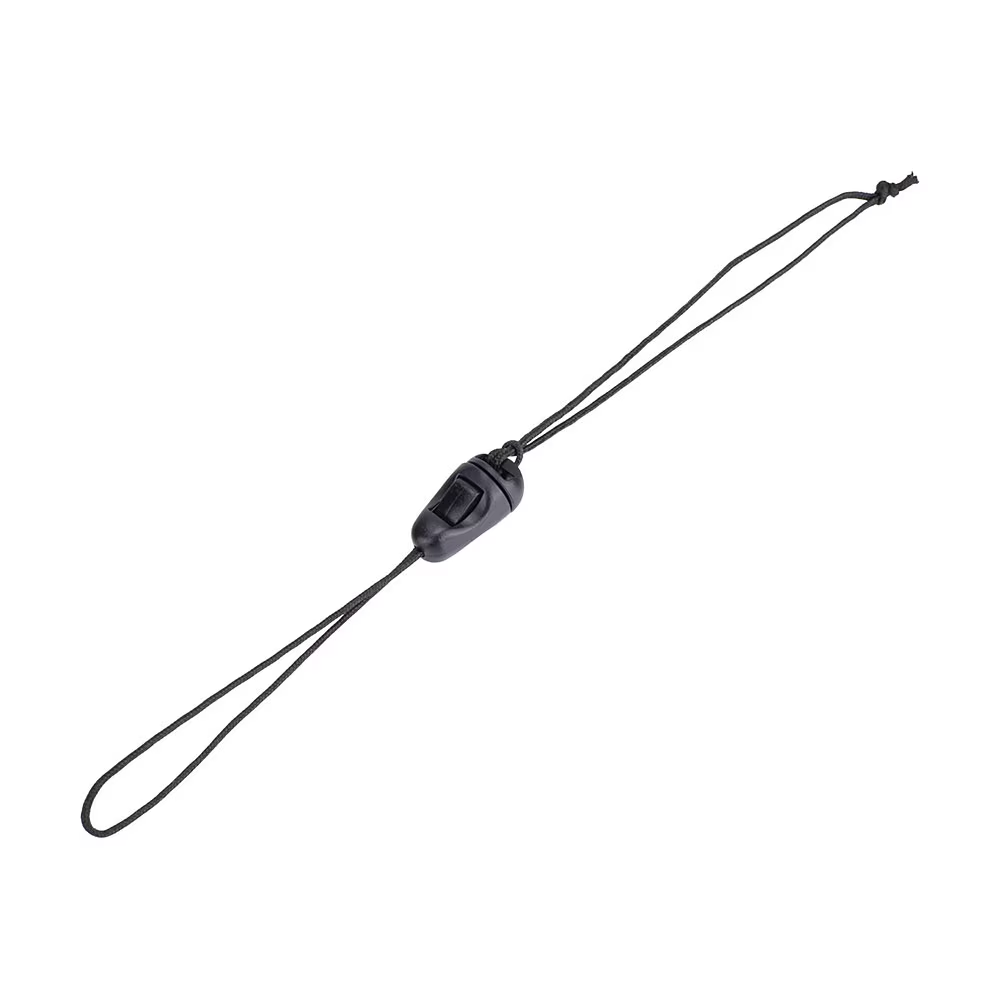
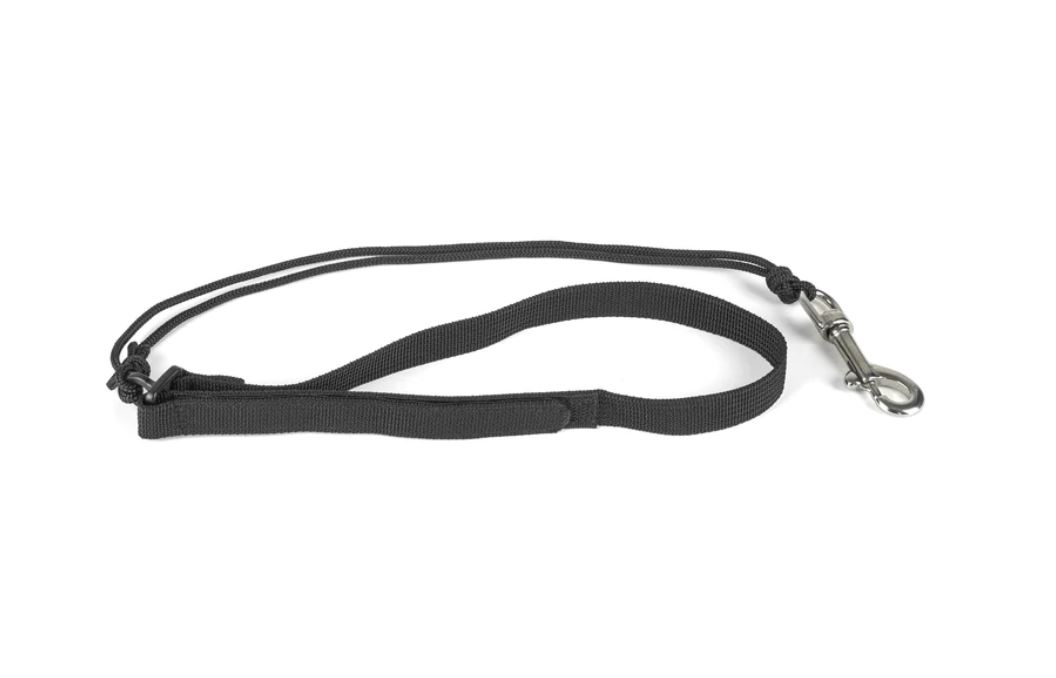
Think of it this way:
- Primary attachment: the normal mechanical mount
- Secondary attachment: a safety string or lanyard
It costs almost nothing and can save you from losing expensive equipment.
Recommended safety accessories
FOTOGRAFIT Shock Line
A practical coiled safety line for securing the complete underwater camera system to your BCD or harness while still giving you freedom of movement.
Lanyard with Double Snap Bolt – 32 cm
A compact lanyard with double snap bolts, useful for securing camera gear and accessories when you want a simple, fixed-length connection.
Underwater camera gear safety: in short
Secure the complete camera system to yourself with a shockline, D-ring and bolt snap. Then secure the smaller accessories separately with a safety string wherever possible.
It is always more satisfying to spend money on new equipment that gives you new possibilities — rather than buying the same thing again because the first one disappeared.
Secure your gear before the sea keeps it.