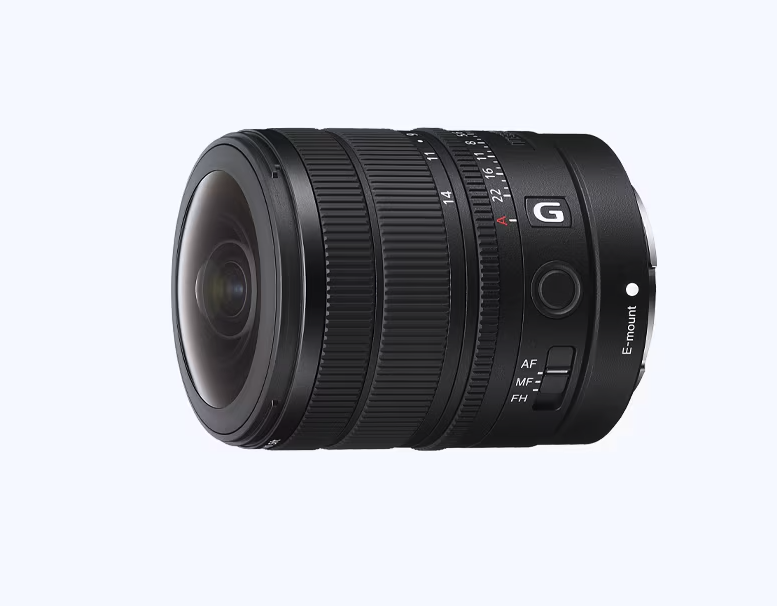
Sony has just announced its first native full-frame E-mount fisheye zoom: the new FE 8–14mm F3.5 Fisheye G.
For underwater photographers, this is a particularly interesting lens. At 14mm it gives a 180° diagonal fisheye view, while at 8mm it produces a full circular 180° fisheye image.
But the part that makes it especially attractive underwater is the size.
The lens is only 83mm long, 63mm in diameter and weighs 314g. It uses internal zooming and focuses as close as 15cm throughout the zoom range. That combination makes it a very promising candidate for compact close-focus wide-angle setups behind a relatively small glass dome.
Why this lens is interesting underwater
Fisheye lenses remain one of the most useful tools for underwater wide-angle photography because they allow us to get extremely close to the subject while still including a very wide background.
The new Sony 8–14mm adds something Sony full-frame users have not had natively before: a fisheye zoom that moves from a conventional 180° diagonal fisheye at 14mm all the way to a circular fisheye at 8mm.
Combined with the short minimum focusing distance and compact dimensions, it could make for a very versatile underwater setup.
Sony FE 8–14mm F3.5 Fisheye G – key specifications
- Full-frame Sony E-mount
- 8–14mm fisheye zoom
- Constant F3.5 aperture
- 180° field of view
- 15cm minimum focusing distance
- Internal zoom
- 314g
- Expected availability: October 2026
Nauticam support: two different routes
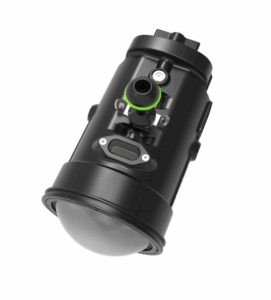
Nauticam has confirmed support for the lens, and there are now two clearly different ways to build the system: an N120 solution using existing Nauticam dome-port architecture, or a new, more compact N100 solution based around a dedicated 140mm glass fisheye port.
The two approaches are not identical, so it is worth understanding the differences before choosing.
Option 1: N120 – the existing and more flexible solution
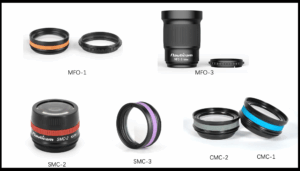
For Nauticam housings using the N120 port system, the Sony 8–14mm is supported with #37305 in combination with #18802 / #18811 / #18812.
These are the three compatible N120 dome-port options:
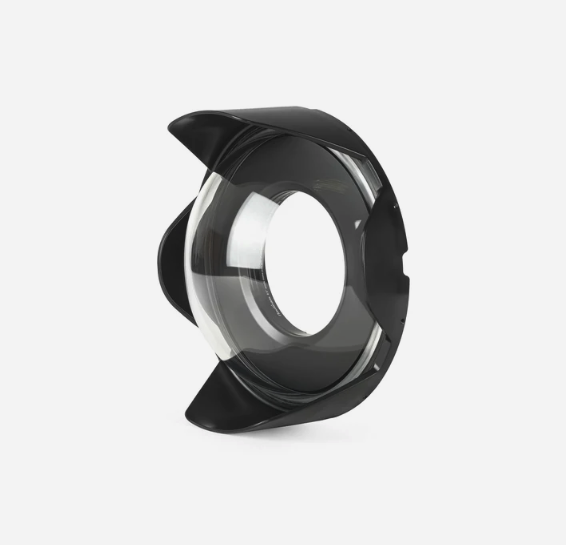
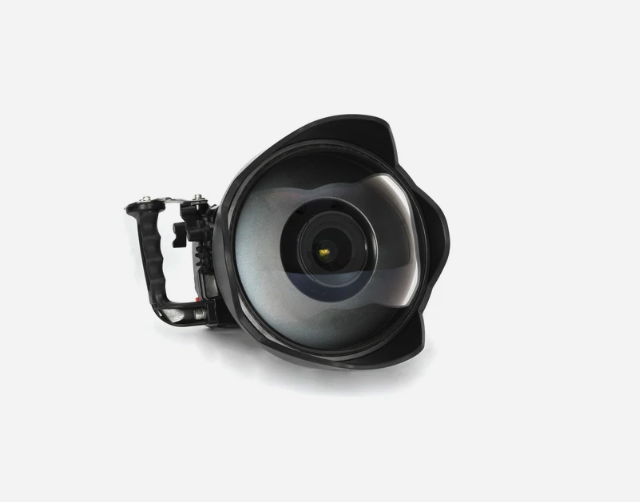
This is the more flexible solution, especially if you want to retain manual focus control.
Nauticam has also introduced two dedicated gears for the lens:
- #37185 SFE814-Z – Zoom Gear for Sony FE 3.5/8-14G
- #37186 SFE814-F – Focus Gear for Sony FE 3.5/8-14G
Important when using 8mm circular fisheye
At 8mm, the lens produces a circular fisheye image. To avoid the dome shade appearing in the frame, the shade must be removed before the dive.
Using the 230mm glass dome
With the 230mm glass dome port #18812, Nauticam notes that the standard focus knob on #37305 may interfere with the dome body.
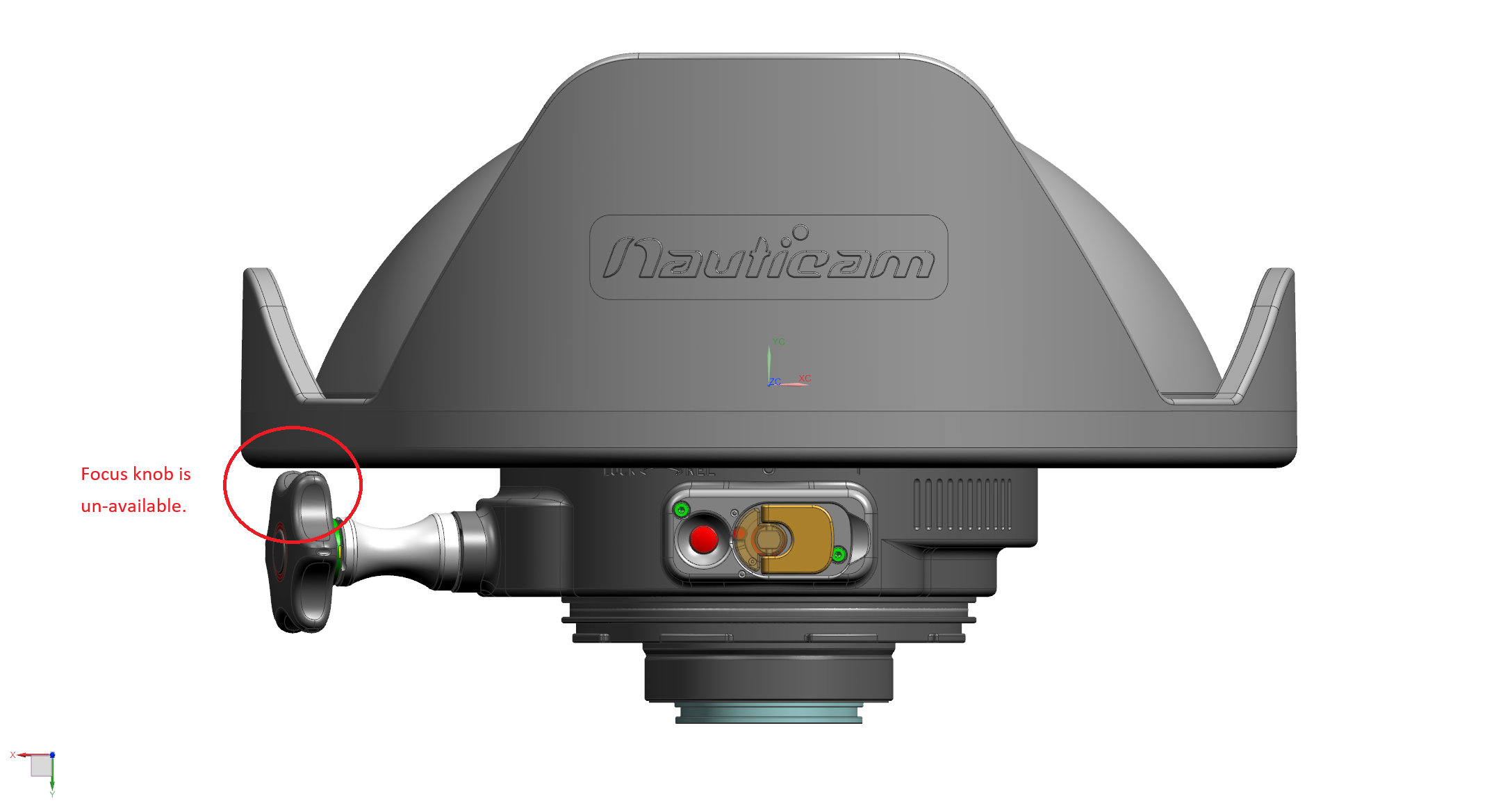
To solve this, Nauticam offers a smaller replacement focus knob:
#95171 Smaller Focus Knob for 37305 to use with 18812
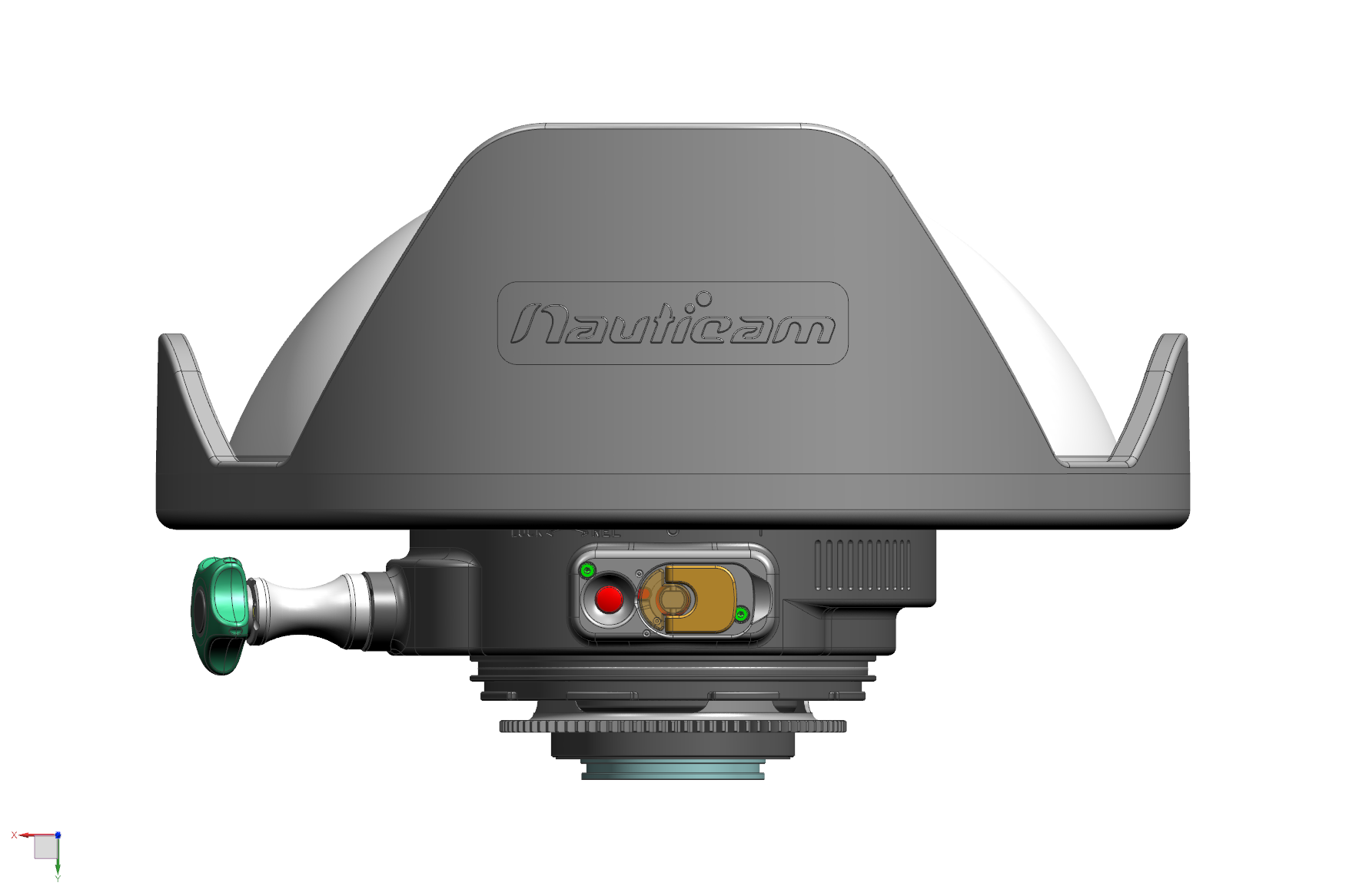
This allows smooth focus control while keeping the larger N120 dome setup.
In practical terms, the N120 route is the better choice if you already own compatible N120 dome ports, want maximum flexibility, or specifically want access to manual focus underwater.
Option 2: N100 – the new compact 140mm glass fisheye solution
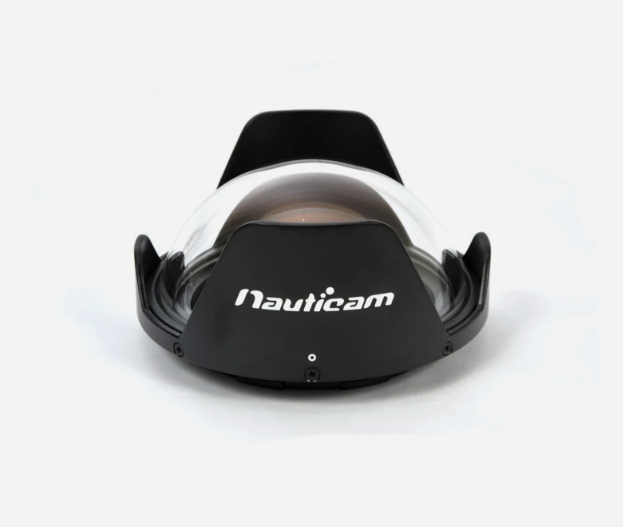
For the N100 port system, Nauticam has created a completely new dedicated port:
#37188 N100 140mm Glass Fisheye Port with Removable Shade II
This is probably the solution that will attract the most attention from photographers who want to keep the whole setup as compact as possible.
The port uses a quick-removable shade similar to the shade system used on Nauticam’s FCP. This is particularly useful with the 8–14mm because the shade needs to be removed when shooting the circular fisheye view at 8mm.
The big advantage is obvious: a small lens combined with a dedicated 140mm glass fisheye dome makes for a much more compact full-frame underwater wide-angle setup than the traditional large-dome approach.
The important limitation: no focus control
The compact N100 solution does have one important limitation.
Due to the limited space available around the lens and port, manual focus control is not supported with the N100 #37188 configuration.
Zoom control is supported, but if you specifically want access to manual focus underwater, Nauticam recommends the N120 solution instead.
N100 or N120 – which one makes most sense?
Choose the N100 #37188 solution if:
- You want the smallest and most compact setup possible
- You like the idea of a dedicated 140mm glass fisheye dome
- You mainly rely on autofocus
- You want a quick-removable shade for switching to 8mm circular fisheye
Choose the N120 solution if:
- You already own compatible N120 ports
- You want more flexibility in dome choice
- You want manual focus control underwater
- You prefer to build the new lens into an existing N120 system
One important incompatibility
Nauticam has specifically confirmed that the newer #18816 140mm optical glass fisheye port with integrated ER 20 is not compatible with the Sony 8–14mm.
The reason is vignetting across the 8–14mm range.
So for a compact 140mm solution, the correct choice is the new N100 #37188, not #18816.
A very interesting new Sony underwater lens
The Sony FE 8–14mm F3.5 Fisheye G could become one of the most interesting new wide-angle lenses for Sony full-frame underwater photographers.
The compact dimensions, 15cm minimum focusing distance and unusual 8–14mm zoom range are already attractive. The fact that Nauticam is supporting it with both an existing N120 route and a new dedicated 140mm N100 glass dome makes it even more interesting.
For photographers who want the smallest possible system, the N100 solution is particularly appealing. For photographers who want full flexibility and manual focus control, N120 remains the stronger option.
We will update this article as soon as Nauticam releases the final port chart and more detailed compatibility information.